Have you ever prepared rava upma only to find it sticky, lumpy or too dry? Getting the perfect texture can be tricky, especially when the water ratio or cooking method is not quite right.
The secret to making soft, fluffy rava upma lies in choosing the right rava, roasting it properly, measuring the water and cooking it over a controlled flame. With a few simple techniques, you can prepare delicious upma for breakfast or an evening snack without worrying about a sticky texture.
In this guide, you will learn how to make rava upma step by step, the ideal water-to-rava ratio, common mistakes to avoid and easy variations to try at home.
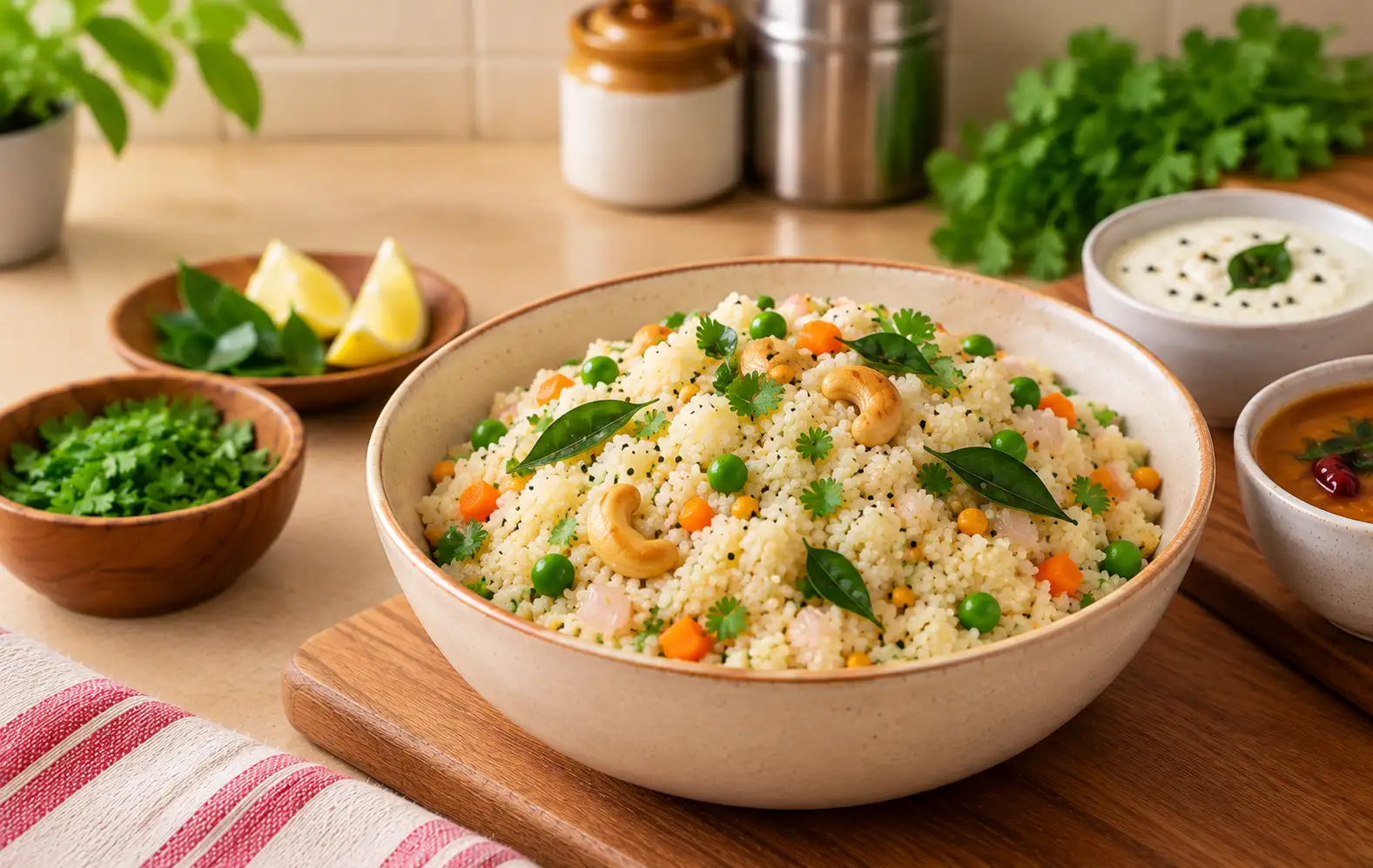
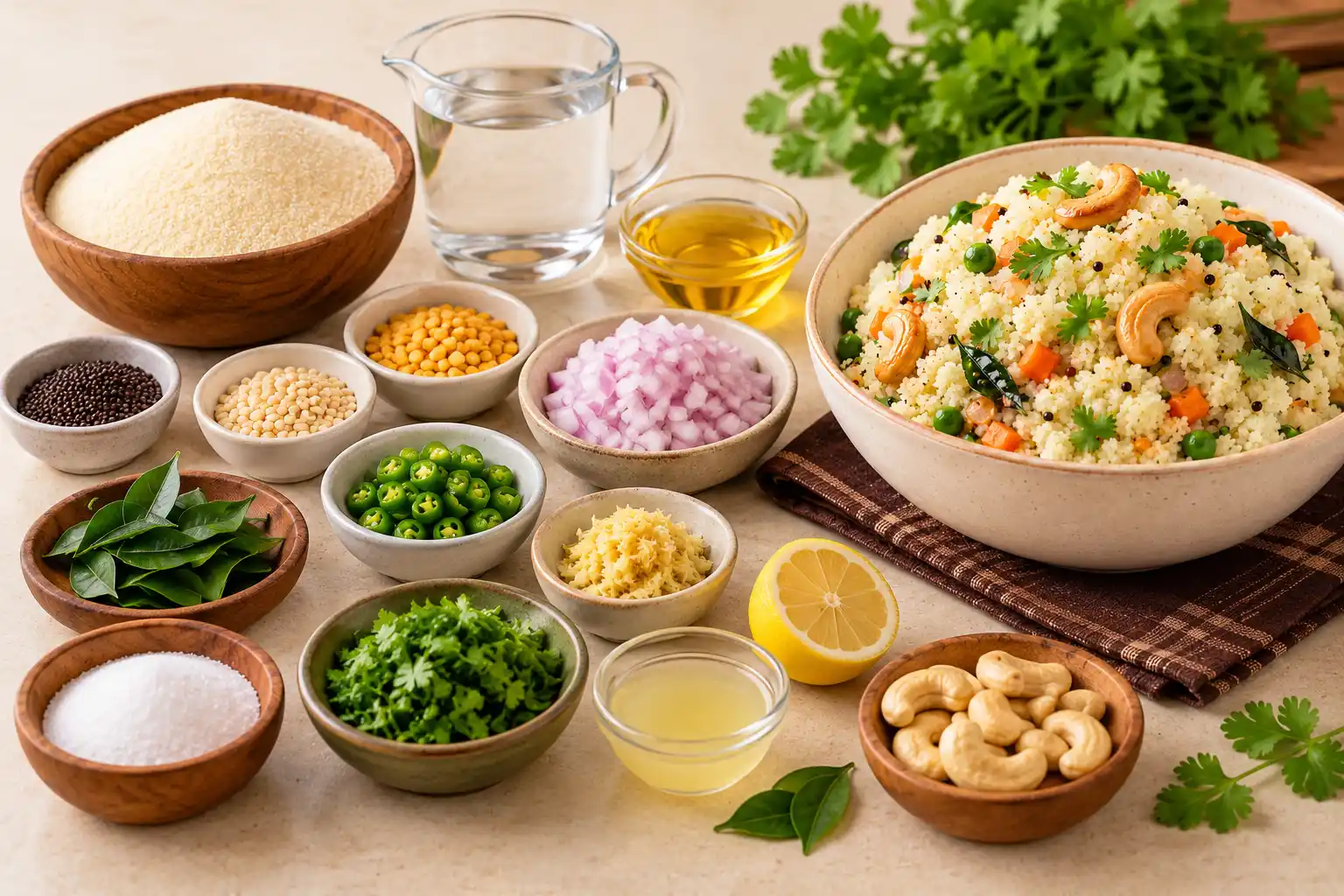
Ingredients for Soft and Fluffy Rava Upma
You can prepare this simple South Indian breakfast using everyday kitchen ingredients.
| Ingredient | Quantity |
|---|---|
|
Rava (sooji)
|
1 cup
|
|
Water
|
2 to 2½ cups, adjusted as needed
|
|
Oil or ghee
|
2 tablespoons
|
|
Mustard seeds
|
1 teaspoon
|
|
Urad dal
|
1 teaspoon
|
|
Chana dal
|
1 teaspoon
|
|
Onion |
1 medium, finely chopped
|
|
Green chillies
|
1–2, chopped
|
|
Ginger
|
1 teaspoon, grated |
|
Curry leaves
|
8–10
|
|
Salt
|
To taste
|
|
Coriander leaves
|
1–2 tablespoons, chopped
|
|
Lemon juice
|
A small squeeze
|
|
Cashews (optional)
|
8–10
|
- Preparation time: Approximately 5–10 minutes.
- Cooking time: Approximately 15–20 minutes.
- Servings: 2–3, depending on portion size.
Note: These timings and quantities are starting estimates. The final water requirement and cooking time depend on the rava you use. Test the recipe with your chosen product before publishing these as definitive recipe specifications.
How to Make Rava Upma Step by Step
Follow these steps to prepare upma with a soft texture and well-cooked grains.
Step 1: Prepare the ingredients
Finely chop the onion, green chillies and ginger. Measure the rava and water before starting to cook.
Keeping everything ready makes the cooking process easier because the tempering and rava cook relatively quickly.
Step 2: Roast the rava
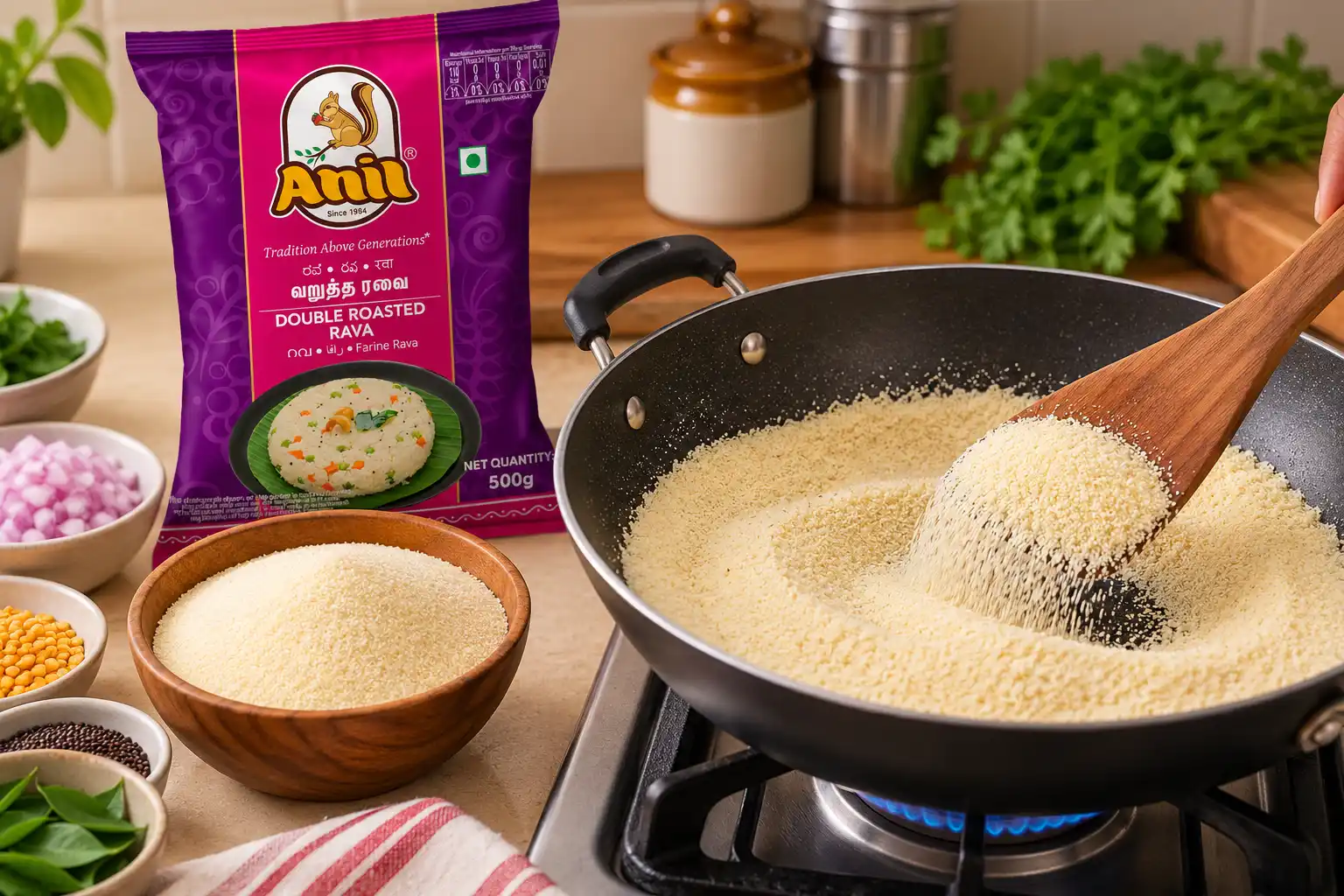
Heat a heavy-bottomed pan over low to medium-low heat. Add the rava and roast it for a few minutes, stirring continuously.
The rava should smell lightly nutty and remain loose rather than forming clumps. Avoid browning or burning it.
If you are using Anil Foods Double Roasted Rava, check the product instructions and roast it briefly over low heat if needed. Since it is already double-roasted, it may not require the same additional roasting time as ordinary rava.
Transfer the rava to a plate and keep it aside.
Step 3: Prepare the tempering
Heat the oil or ghee in the same pan. Add the mustard seeds and allow them to splutter.
Add the urad dal and chana dal and fry until lightly golden. If you prefer a richer flavour, add cashews and roast them until golden.
Add the curry leaves and stir briefly.
Step 4: Saute the onion, ginger and chillies
Add the chopped ginger and green chillies, followed by the onion.
Saute until the onion becomes soft and translucent. There is no need to brown it deeply.
If you are preparing vegetable upma, add finely chopped carrots, beans or peas at this stage and cook until they begin to soften.
Step 5: Boil the water
Pour the measured water into the pan and add salt to taste. Bring the mixture to a rolling boil.
For the first attempt, start with approximately 2 cups of water per cup of medium-grain rava. You can adjust the quantity depending on the grain size and the consistency you prefer.
Step 6: Add the roasted rava gradually
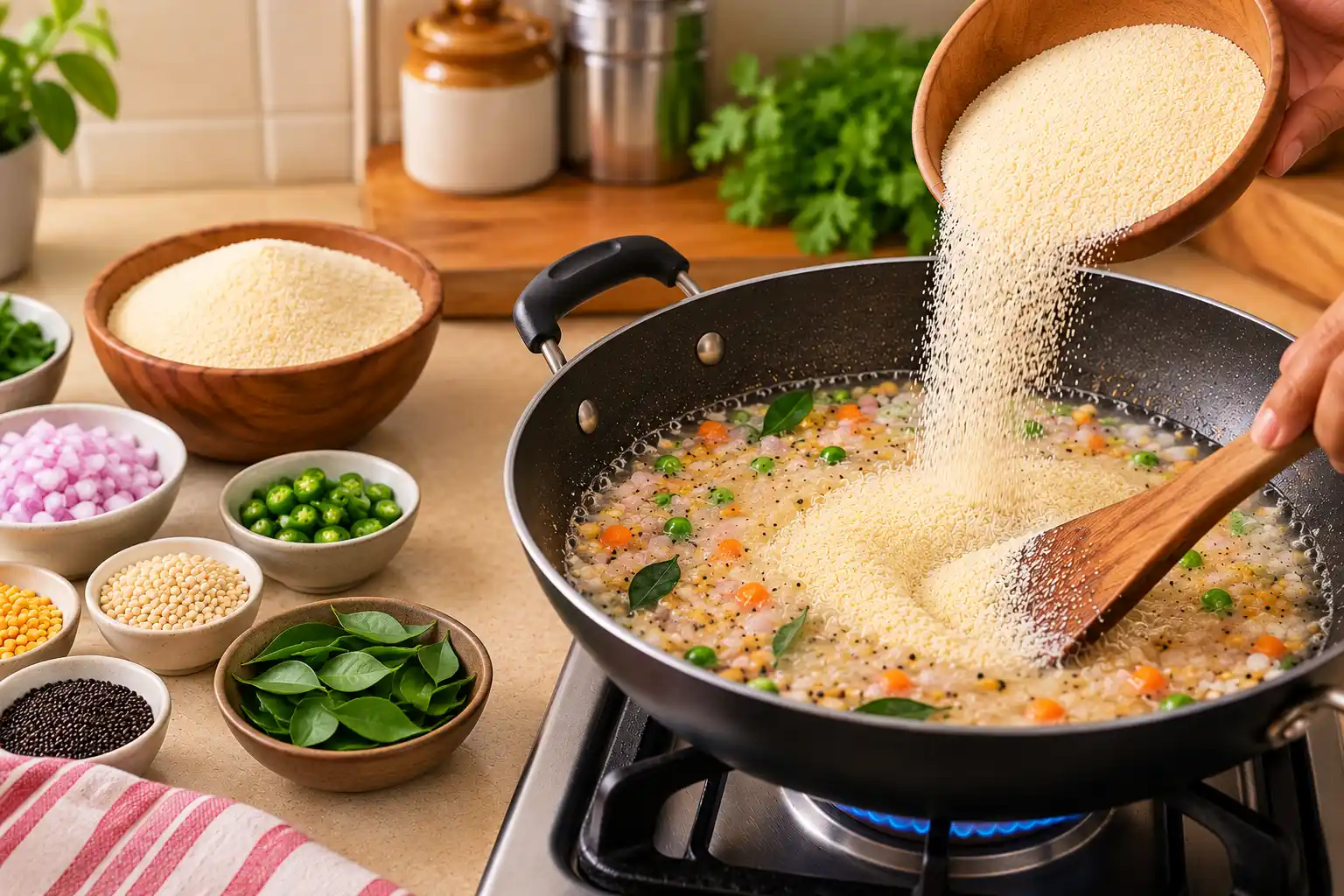
Reduce the flame to low. Slowly sprinkle the roasted rava into the boiling water while stirring continuously with a spoon or spatula.
Avoid adding the entire quantity in one heap. Gradual addition helps distribute the rava evenly through the water and reduces the chance of lumps forming.
Step 7: Cook the upma gently
Continue stirring until the rava absorbs most of the water and the mixture begins to thicken.
Reduce the flame and cover the pan with a lid. Allow the upma to cook for a few minutes, checking that the grains become tender.
The exact cooking time depends on the rava and the pan. If the mixture looks dry before the grains are cooked, add a little hot water and continue cooking.
Step 8: Rest and fluff before serving
Once the rava is fully cooked, switch off the stove and leave the pan covered for 3–5 minutes.
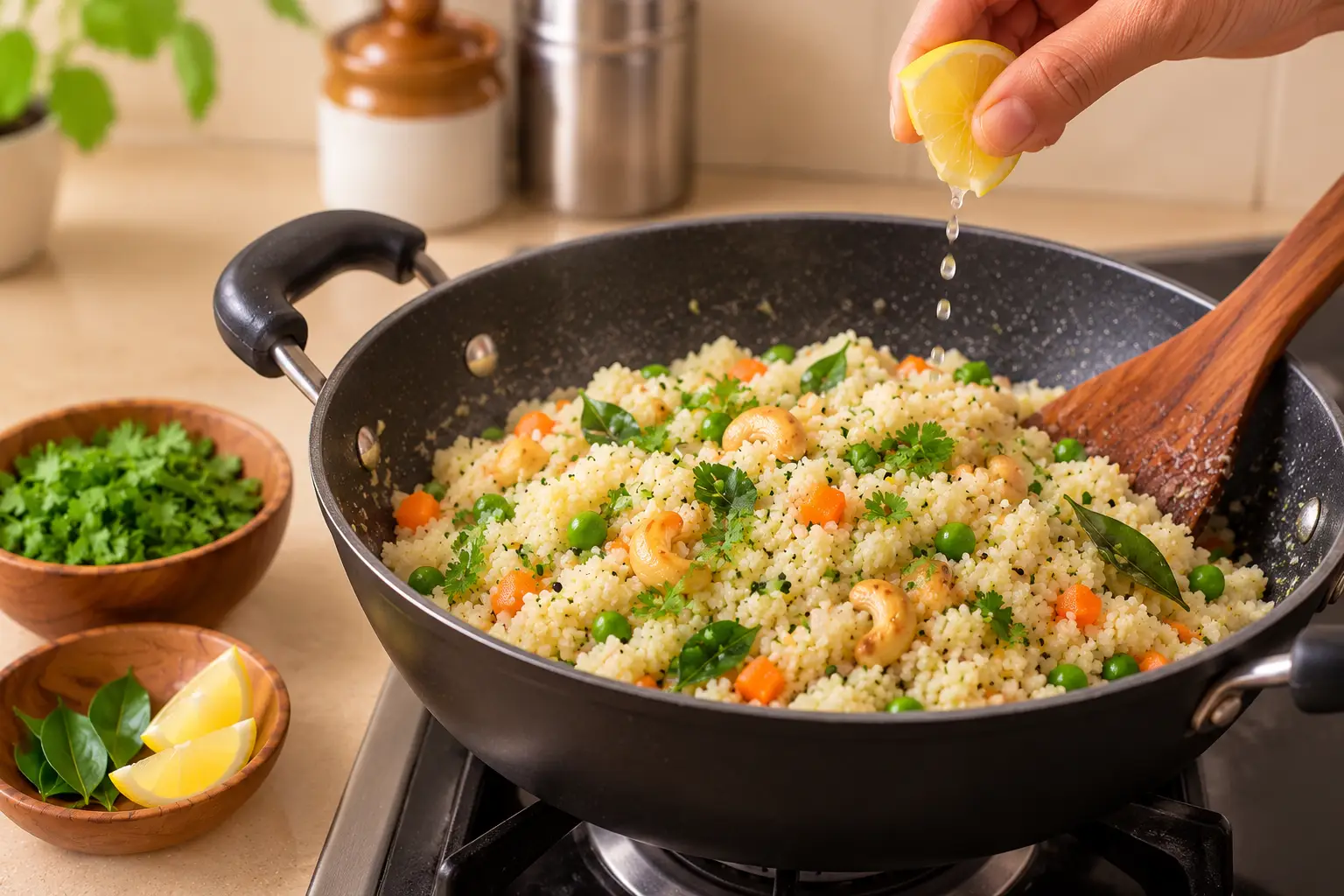
Add the chopped coriander leaves and a squeeze of lemon juice. Gently fluff the upma with a fork or spoon before serving.
Serve hot with coconut chutney, sambar or your favourite accompaniment.
What Is the Right Water-to-Rava Ratio?
The water ratio plays an important role in determining whether your upma turns out soft, dry or sticky.
| Rava quantity | Starting water quantity | Expected result |
|---|---|---|
|
½ cup
|
1–1¼ cups
|
Small batch of upma
|
|
1 cup
|
2–2½ cups
|
Soft upma with a consistency adjusted to preference
|
|
2 cups
|
4–5 cups
|
Larger batch for a family
|
These are starting ranges rather than fixed rules. Fine rava, coarse rava and different pre-roasted products may absorb water differently.
Tip: Begin with the lower end of the recommended range and add a little more hot water if needed. It is easier to adjust the consistency during cooking than to correct upma that has become excessively watery.
7 Tips to Make Rava Upma Soft, Fluffy and Non-Sticky
1. Choose the right rava
The grain size affects the texture of the finished dish. Medium-grain rava is a common choice for traditional upma, while finer varieties can produce a softer consistency.
Choose a product suited to your preferred texture and follow its package instructions.
Want to understand the differences between the available varieties? Read our detailed guide on Types of Rava to learn about the different types of rava and their uses in everyday cooking.
2. Roast the rava evenly
Roasting improves the aroma and helps prepare the grains for cooking. Stir continuously and avoid using high heat.
For double-roasted rava, check whether additional roasting is necessary rather than automatically applying the same roasting time used for ordinary rava.
3. Measure the water carefully
Excess water is a common reason for mushy or sticky upma. Use a measuring cup instead of estimating the quantity by eye.
Adjust the ratio based on the product and the consistency you want.
4. Add the rava slowly
Gradually adding the rava to boiling water while stirring helps distribute the grains evenly and reduces lump formation.
5. Keep stirring during the initial cooking stage
Stirring is especially important while adding the rava. Once the mixture thickens, lower the heat and allow it to finish cooking gently.
6. Use the right flame
High heat can cause the mixture to cook unevenly or stick to the bottom of the pan. A controlled flame helps the rava absorb water more evenly.
7. Allow the upma to rest
A short resting period after cooking allows the remaining moisture to distribute through the grains. Fluff gently before serving instead of pressing the mixture together.
Easy Rava Upma Variations to Try at Home
Once you are comfortable with the basic recipe, you can make different versions using the same cooking method.
- Vegetable upma: Add finely chopped carrots, beans and peas while sautéing the onion. Cook the vegetables until nearly tender before adding water.
- Tomato upma: Add chopped tomatoes after the onion and cook until soft. Their moisture may affect the amount of water required.
- Lemon-coriander upma: Add fresh lemon juice and chopped coriander after cooking for a bright, fresh flavour.
- Cashew upma: Fry cashews in ghee until golden and add them to the tempering.
- Peanut upma: Add roasted peanuts for a crunchy texture.
- Spicy upma: Adjust the green chillies and add a little black pepper to suit your preference.
For another traditional recipe idea, try Samba Rava Halwa with Anil Samba Rava.
Common Rava Upma Mistakes and How to Fix Them
Even a simple recipe can go wrong when the water ratio, heat or stirring is not right. Use this table to identify the problem and correct it.
| Problem | Possible reason | How to fix it |
|---|---|---|
|
Sticky upma
|
Excess water or an unsuitable water ratio
|
Cook uncovered briefly over low heat if the grains are already tender. Avoid adding more water.
|
|
Lumpy upma
|
Rava added too quickly or insufficient stirring
|
Break up small lumps immediately and stir thoroughly. Add the rava gradually next time.
|
|
Dry upma
|
Insufficient water or excessive evaporation
|
Sprinkle a little hot water, cover and steam until the grains soften.
|
|
Hard or undercooked upma
|
Insufficient liquid or cooking time
|
Add a little hot water, cover and cook on low heat until tender.
|
|
Watery upma
|
Too much liquid
|
Simmer uncovered over low heat, stirring gently, until the excess moisture evaporates.
|
|
Burnt upma |
Excessive heat or insufficient stirring
|
Move the unburnt portion to another pan without scraping the burnt base into it.
|
|
Unevenly cooked upma
|
Uneven distribution of water or rava
|
Stir well during the initial cooking stage and allow the mixture to steam evenly.
|
Remember: Do not switch off the stove simply because the water has disappeared. Check that the rava is fully cooked and tender before allowing it to rest.
How to Serve Rava Upma
Rava upma tastes best when served hot, soon after cooking. As it cools, the grains may firm up and the texture may change.
Here are a few popular accompaniments:
- Coconut chutney
- Sambar
- Peanut chutney
- Fresh coriander leaves
- Lemon wedges
You can also serve it with a cup of filter coffee or tea for a satisfying South Indian breakfast.
Frequently Asked Questions About Rava Upma
1. Why does my rava upma become sticky?
Excess water is a common cause. An unsuitable water ratio or overcooking can also affect the texture. Measure the water carefully, add the rava gradually and cook until the grains are tender.
2. How much water should I use for 1 cup of rava?
Start with approximately 2 cups of water for 1 cup of medium-grain rava. Depending on the product and desired consistency, you may need up to 2½ cups.
3. How do I make rava upma soft and fluffy?
Use a suitable rava, roast it evenly when needed, measure the water and stir continuously while adding the grains. Cook on low heat and let the upma rest briefly before fluffing.
4. Should I roast rava before making upma?
Roasting is generally recommended for ordinary rava because it improves aroma and helps prepare the grains for cooking. Double-roasted rava may need little or no additional roasting, depending on the product instructions.
5. How can I prevent lumps in rava upma?
Bring the water to a boil and add the roasted rava gradually while stirring continuously. Avoid adding the entire quantity at once.
6. Which rava is best for making upma?
Medium-grain semolina, commonly called rava or sooji, is a popular choice. The final texture depends on the grain size, the product and the amount of water used.
7. Can I add vegetables to rava upma?
Yes. Add finely chopped vegetables after sautéing the onion and cook them until nearly tender. Adjust the cooking liquid and cooking time as necessary.
8. How can I fix dry or hard upma?
Sprinkle a few tablespoons of hot water over the upma, cover the pan and steam over low heat until the grains become tender. Fluff gently before serving.
Conclusion
Making soft, fluffy and non-sticky rava upma does not require complicated techniques. The key is to choose suitable rava, roast it appropriately, measure the water carefully and add the grains gradually while stirring.
Once you understand how your chosen rava absorbs water, it becomes easier to prepare upma with a consistent texture every time.
Looking for rava for your everyday recipes? Explore the Anil Foods Rava Collection to discover Double Roasted Rava and Samba Rava for different cooking needs.
Further Reading
- 15 Easy Rava Recipes
- Types of Rava
- Read FSSAI’s Food Safety and Standards (Labelling and Display) Regulations for official information about packaged-food labelling requirements.
Table of Contents