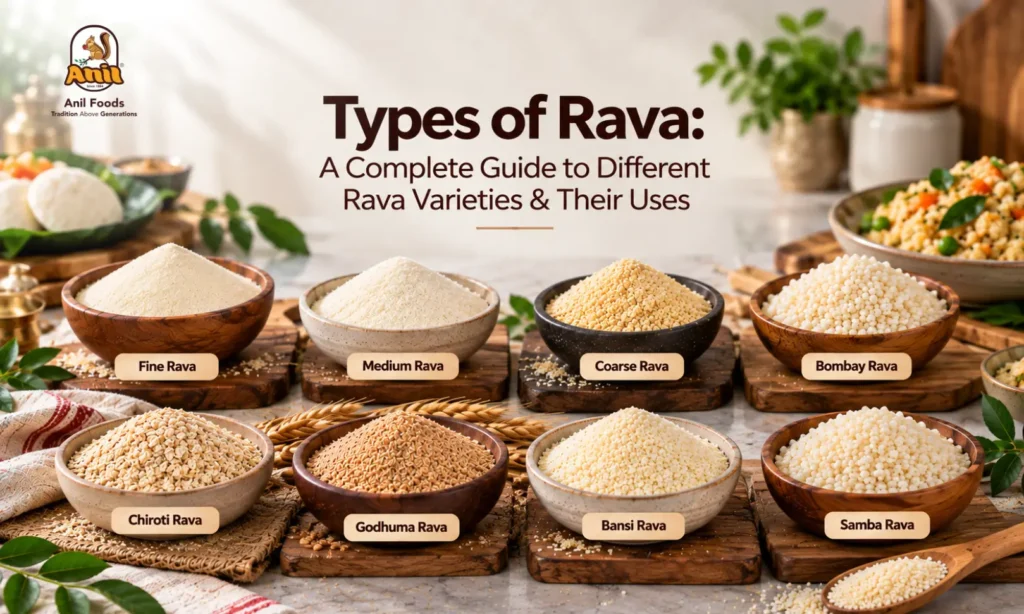
From everyday upma to festive kesari, rava is a familiar ingredient in Indian kitchens. But rava is available in different textures and varieties, including fine rava, coarse rava, Bombay rava, Chiroti rava, wheat rava, Bansi rava and Samba rava.
The right type of rava can affect the texture and cooking time of a dish. Fine rava is suitable for softer preparations, while medium and coarse varieties can provide a more distinct bite.
In this guide, let’s explore the different types of rava, their typical uses, and how to choose the right variety for popular Indian dishes.
What Is Rava?
Rava, also known as sooji or semolina, is a granular ingredient produced by milling and processing grain, most commonly wheat. Depending on the milling process, rava can have fine, medium or coarse grains.
Rava is a granular wheat product made by milling wheat into relatively coarse particles. Unlike finely milled wheat flour, rava retains a noticeable grainy texture, making it suitable for dishes where texture and bite are important.
For the regulatory standards applicable to semolina, refer to the FSSAI standards for cereals and cereal products.
Rava is commonly used to prepare:
- Upma
- Rava dosa
- Rava idli
- Kesari
- Sheera
- Rava laddu
- Kichadi
- Payasam
- Halwa
- Various snacks and sweets
Rava, Sooji and Semolina: Are They the Same?
Rava and sooji are commonly used interchangeably in Indian cooking, while semolina is the commonly used English term for a granular wheat product.
However, these names do not always indicate the exact grain size. The texture can vary depending on the milling process and product. When a recipe calls for a specific type of rava, check the product label and grain size.
Want to explore how rava is used across different Indian preparations? Read our guide on how rava is used in Indian cooking
Different Types of Rava
Rava is available in different grain sizes and varieties, and each can behave differently during cooking. Some are better suited to soft sweets and batters, while others are preferred when you want more texture in savoury dishes.
Rava Based on Grain Size
1. Fine Rava
Fine rava has small, delicate grains and is often chosen for preparations where a smoother consistency is preferred. Because the grains are smaller, it can blend easily with other ingredients and absorb liquid relatively quickly.
Common uses: Halwa, sweets, soft preparations and selected batter-based recipes.
Fine rava is particularly useful when the finished dish should have a soft, cohesive texture rather than a pronounced grain.
2. Medium Rava
Medium rava offers a balance between softness and grain definition, making it one of the more versatile options for everyday cooking.
Common uses: Upma, kesari, sheera, rava laddu, kichadi and other everyday preparations.
Its balanced grain size makes it suitable for recipes where you want the rava to remain noticeable without making the dish overly coarse.
3. Coarse Rava
Coarse rava has larger grains that remain more noticeable after cooking. It is often preferred for preparations where the texture of the rava is an important part of the dish.
Common uses: Upma, kichadi, savoury preparations and selected traditional snacks.
Since the grains are larger, recipes using coarse rava may need adjustments to the amount of liquid and cooking time.
Commonly Known Rava Varieties
4. Bombay Rava
Bombay rava is a commonly used variety in Indian kitchens and is generally available in a medium to medium-coarse grain. It is valued for its versatility and can be used across several familiar rava-based dishes.
Common uses: Upma, kesari, sheera, rava laddu, rava idli and some rava dosa recipes.
The exact grain size can differ between products, so it is useful to check the packaging when a recipe calls for a specific texture.
5. Chiroti Rava
Chiroti rava is a particularly fine variety associated with chiroti, a delicate layered sweet prepared in parts of South India. Its fine grains are suitable for recipes where the dough or mixture needs to achieve a delicate finish.
Common uses: Chiroti and other fine-textured sweet preparations.
For recipes that depend on thin layers or a delicate texture, using the rava specified in the recipe can make a noticeable difference to the final result.
6. Wheat Rava / Godhuma Rava
Wheat rava, also known as godhuma rava, is made from wheat and is generally available in medium to coarse grains. It has a more substantial character than finer varieties and is commonly used in hearty everyday dishes.
Common uses: Wheat rava upma, porridge, kichadi, payasam and other traditional preparations.
It is best understood as a distinct wheat-based rava variety rather than simply a healthier substitute for regular rava, as its cooking behaviour and texture can differ.
7. Bansi Rava
Bansi rava is another variety found in Indian markets and is generally recognised for its relatively firm grain. It is used in dishes where maintaining some grain definition after cooking is desirable.
Common uses: Upma, kesari bath, kichadi and selected traditional preparations.
As with other named rava varieties, the grain size and characteristics can vary between products, so the label can help when choosing one for a specific recipe.
8. Samba Rava
Samba rava is commonly used in South Indian cooking and is generally associated with a coarser, more substantial grain. It works well in dishes where a heartier texture is preferred.
Common uses: Samba rava upma, kichadi, kanji, payasam and other one-pot preparations.
Its larger grain can give the finished dish a more substantial bite, while the amount of water and cooking time may need to be adjusted according to the specific product.
Rava Types Comparison Table
| Rava Type | Typical Texture | Common Uses | Popular Preparations |
|---|---|---|---|
|
Fine Rava
|
Fine and soft
|
Smooth preparations
|
Halwa, sweets
|
|
Medium Rava
|
Moderately grainy
|
Everyday cooking
|
Upma, kesari, sheera
|
|
Coarse Rava
|
Large and firm
|
Textured dishes
|
Upma, kichadi
|
|
Bombay Rava
|
Medium to medium-coarse
|
Versatile cooking
|
Upma, kesari, rava idli
|
|
Chiroti Rava
|
Very fine and delicate
|
Layered preparations
|
Chiroti, selected sweets
|
|
Wheat Rava
|
Medium to coarse
|
Hearty dishes
|
Wheat rava upma, porridge
|
|
Bansi Rava
|
Generally coarse and firm
|
Distinct-textured dishes
|
Upma, kesari bath, kichadi
|
|
Samba Rava
|
Coarse and hearty
|
Wholesome preparations
|
Upma, kichadi, kanji
|
Note: Grain size, colour and texture can vary between brands and products.
Which Rava Is Best for Different Dishes?
There is no single best rava for every recipe. The right choice depends on the recipe and the texture you want.
| Dish | Rava Commonly Used | Why |
|---|---|---|
|
Upma
|
Medium or coarse rava
|
Gives a distinct grainy texture
|
|
Kesari |
Fine or medium rava
|
Creates a softer finish
|
|
Rava laddu
|
Fine or medium rava
|
Helps create a cohesive texture
|
|
Rava idli
|
Fine or medium rava
|
Suitable for a softer texture
|
|
Rava dosa
|
Fine or medium rava
|
Works with other flours for a thin batter
|
|
Chiroti |
Chiroti rava
|
Suited to delicate layered preparations
|
|
Wheat rava upma
|
Wheat rava
|
Provides a hearty bite
|
|
Kichadi
|
Medium or coarse rava
|
Holds texture during cooking
|
|
Payasam |
Wheat or Samba rava
|
Provides a more substantial texture
|
For more quick breakfast ideas, explore these Indian breakfast recipes.
How to Choose the Right Rava
Choosing rava becomes easier when you consider the recipe, texture and product quality.
1. Match the recipe
Start with the rava recommended in your recipe. Different dishes may require different grain sizes.
2. Consider the texture
Fine rava generally gives a softer result, while medium and coarse varieties provide more noticeable grain and bite.
3. Check the grain size
Look for product descriptions such as fine, medium or coarse when the texture is important to the recipe.
4. Check the packaging
Choose sealed, intact and moisture-free packs. Also check the packing date and best-before information.
5. Choose consistent quality
Uniform grain size and clear product labelling can make cooking more predictable.
Looking for Rava for Everyday Cooking?
If you regularly prepare dishes such as upma, kesari or other rava-based recipes, choosing a product with a consistent grain size can help you achieve more predictable results.
Explore the Anil Foods Rava collection to compare available rava products for your everyday cooking needs.
How to Store Rava
Proper storage helps protect rava from moisture and insects.
- Transfer an opened packet to a clean, dry, airtight container.
- Store it in a cool, dry place away from direct sunlight.
- Always use a clean and dry spoon.
- Keep rava away from steam and other sources of moisture.
- Check the product before use, especially if it has been stored for a long time.
- In humid conditions, refrigeration may be considered if suitable for the product and packaging.
Conclusion
Understanding the different types of rava makes it easier to choose the right variety for each recipe. Fine rava works well for softer preparations, while medium and coarse rava can provide more texture. Bombay rava is a versatile everyday option, while Chiroti rava is suited to delicate layered preparations. Wheat, Bansi and Samba rava offer additional options for hearty and traditional dishes.
There is no single rava that works best for every recipe. Consider the grain size, cooking method and texture you want before choosing a variety.
Frequently Asked Questions
1. What are the different types of rava?
Common varieties include fine, medium and coarse rava, along with Bombay rava, Chiroti rava, wheat rava, Bansi rava and Samba rava. They differ mainly in grain size, texture and typical culinary uses.
2. Which rava is best for upma?
Medium or coarse rava is commonly used for upma because it can provide a distinct and fluffy grain texture. Bombay rava, Bansi rava and other suitable medium or coarse varieties can also be used depending on the recipe.
3. Which rava is best for rava dosa?
Many rava dosa recipes use fine or medium rava along with rice flour and other ingredients. The exact choice depends on the recipe and the texture desired.
4. What is fine rava?
Fine rava has smaller grains and a softer texture than medium or coarse rava. It is commonly used for preparations where a smooth or soft texture is preferred.
5. Is rava and sooji the same?
Rava and sooji are commonly used as interchangeable names for granular wheat products in Indian cooking. However, grain size and milling specifications can vary between products.
6. What is Chiroti rava used for?
Chiroti rava is a very fine variety traditionally used to prepare chiroti, a delicate layered sweet. It can also be used in other preparations that require a fine texture.
7. What is wheat rava?
Wheat rava, also called godhuma rava, is a granular wheat product that is generally coarser and more substantial than fine rava. It is commonly used for upma, porridge, payasam and similar preparations.
8. What is the difference between Bombay rava and Chiroti rava?
Bombay rava is commonly used as an everyday rava and is generally medium to medium-coarse, while Chiroti rava is typically much finer and is traditionally associated with delicate preparations such as chiroti.
9. How should rava be stored?
Store rava in a clean, dry, airtight container in a cool and dry place. Keep it away from moisture and always use a dry spoon when handling it.
Table of Contents