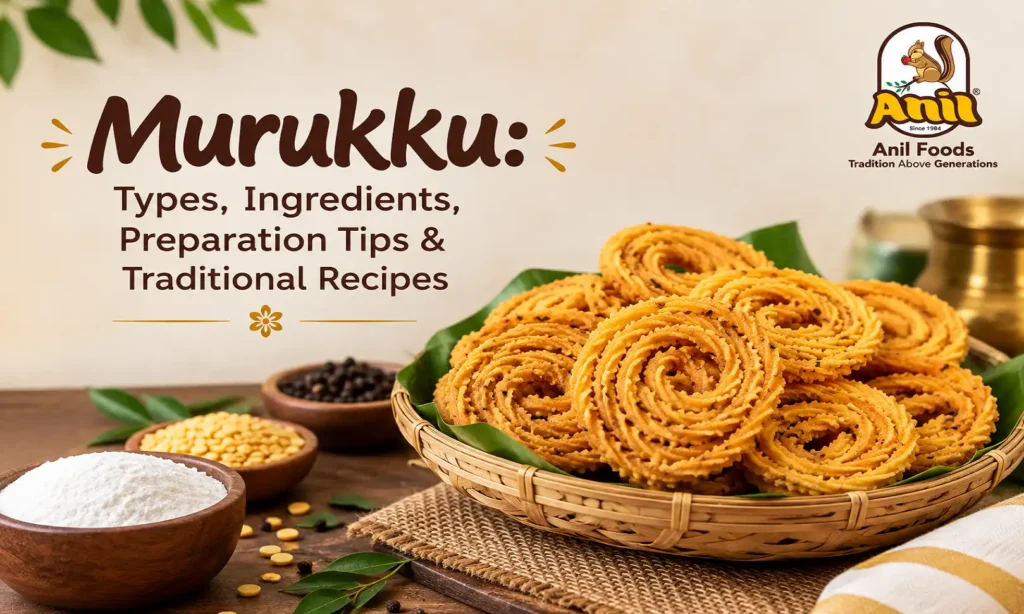
Few Indian snacks bring together crispness, flavour and tradition quite like murukku. Its familiar spiral shape and satisfying crunch make it a favourite during Diwali and other celebrations, while its simple ingredients have kept it a popular homemade snack throughout the year.
Although rice flour forms the base of many traditional murukku recipes, small changes in flour combinations, seasoning, shaping and frying can create completely different varieties. Thenkuzhal is light and delicate, Mullu Murukku has a ridged texture, and Kai Murukku is known for its distinctive hand-shaped coils.
But making good murukku is not just about following a recipe. The flour ratio, dough consistency, shaping technique and oil temperature all influence whether the final snack turns out crisp, light and evenly cooked.
This guide covers everything from the ingredients and popular types of murukku to choosing the right flour, preparing the dough, frying it co
What Is Murukku?
Murukku is a traditional South Indian savoury snack prepared from a flour-based dough that is shaped into coils, spirals or other patterns and deep-fried until crisp.
The word “murukku” is associated with the twisted shape of the snack. Rice flour is commonly used as the main ingredient, while urad dal flour or other lentil flours may be added depending on the recipe.
A murukku press is generally used to create the familiar shapes. Different moulds produce different varieties, from smooth and delicate Thenkuzhal to rigid Mullu Murukku and flat Ribbon Murukku.
Although recipes differ between households and regions, the basic principle remains the same: prepare a balanced dough, shape it carefully and fry it at the right temperature.
Why People Love Murukku
Murukku has remained a favourite across generations because it combines simple ingredients with distinctive texture, flavour and tradition.
- Crispy texture: Properly prepared murukku has a light, crunchy texture that makes it hard to stop at just one.
- Different varieties: Changes in flour, seasoning and shaping create a wide range of murukku styles.
- Festive tradition: Homemade murukku is closely associated with Diwali, Krishna Jayanthi and other family celebrations.
- Everyday snack: It is just as enjoyable with evening tea or South Indian filter coffee as it is on a festive platter.
- Homemade appeal: Preparing murukku at home continues to be part of many family traditions, with recipes often passed down through generations.
Looking for more ideas for homemade Indian snacks? Explore our guide to healthy snacks for Indian families for more traditional and easy snack options.
Main Ingredients Used in Murukku
The exact ingredients vary depending on the variety, but a traditional murukku generally relies on a few basic ingredients. Each one plays a role in the flavour, texture or structure of the snack.
Rice Flour
Rice flour forms the base of many murukku recipes and helps give the snack its characteristic crisp texture. The quality and fineness of the flour can also affect how easily the dough passes through the mould.
Urad Dal Flour
Urad dal flour is commonly combined with rice flour to add flavour and contribute to the texture of the finished murukku. The proportion can vary depending on the recipe and variety.
Butter
Butter adds richness and can give the murukku a lighter, more delicate texture. It should be mixed evenly into the flour before water is added.
Sesame Seeds
Sesame seeds provide a mild nutty flavour and a pleasant bite. They are commonly used in traditional savoury murukku recipes.
Cumin Seeds
Cumin adds a warm, aromatic flavour and works particularly well in lightly seasoned murukku varieties.
Asafoetida
A small amount of asafoetida adds savoury depth and complements the other spices in the dough.
Salt
Salt balances the flavours and should be mixed evenly through the dry ingredients before preparing the dough.
Oil
Oil is used for deep frying and plays an important role in the final texture. If the oil is too cool, the murukku can absorb excess oil; if it is too hot, the outside may brown before the inside cooks properly.
Popular Types of Murukku
Murukku has developed into many varieties over the years. The differences can come from the flour combination, seasoning, shape or preparation method.
1. Thenkuzhal Murukku
Thenkuzhal is one of the most familiar varieties of murukku. It is generally lightly seasoned and has a delicate, crisp texture.
The dough is pressed through a simple mould to create smooth coils. It is an excellent choice for those who prefer a traditional murukku with mild seasoning.
2. Butter Murukku
Butter Murukku uses butter in the dough, giving it a richer flavour and a delicate texture.
It is particularly popular during festive occasions and makes an excellent accompaniment to tea or coffee.
3. Kai Murukku
Kai Murukku is traditionally shaped by hand rather than being formed entirely using a murukku press.
Creating the intricate coils requires practice and patience, but the handmade appearance and traditional preparation make it especially distinctive.
4. Mullu Murukku
Mullu Murukku gets its name from its thorn-like, ridged appearance.
The ridges create a crunchy texture and give the snack a distinctive appearance. It is a popular choice for festive snack platters.
5. Ribbon Murukku
Ribbon Murukku differs from traditional spiral varieties because it is pressed into flat, ribbon-like strips.
Its thin shape produces a particularly crisp texture and allows seasoning to spread evenly across the snack.
6. Garlic Murukku
Garlic Murukku adds garlic to the traditional dough, creating a stronger aroma and savoury flavour.
It is a good option for those who prefer a bolder variation of the classic snack.
7. Curry Leaf Murukku
Curry leaves can be finely chopped or ground and added to the dough to create a fragrant variation.
The familiar aroma of curry leaves gives this murukku a distinctly South Indian character.
8. Millet Murukku
Millet-based versions offer a modern variation of the traditional snack. Different millet flours can be incorporated into suitable recipes.
Because millet flour behaves differently from rice flour, the flour ratio and dough consistency may need to be adjusted carefully.
What Flour Is Best for Murukku?
Rice flour is the foundation of many traditional murukku recipes because it contributes to the crisp texture. Urad dal flour is also commonly added for flavour and texture.
Making the flour mixture at home is possible, but it requires measuring, preparing and balancing different flours correctly.
For a more convenient option, a ready murukku flour blend can simplify preparation.
Anil Murukku Flour combines rice flour and lentil flours and is designed for preparing traditional crispy snacks. It can be a convenient choice when you want to reduce preparation time while keeping the familiar character of homemade murukku.
How to Make Traditional Murukku at Home
Ingredients
- 2 cups Murukku flour
- 1–2 teaspoons sesame seeds
- 1 teaspoon cumin seeds
- A pinch of asafoetida
- Salt to taste
- 1–2 tablespoons butter
- Warm water as required
- Oil for deep frying
Preparation Method
Step 1: Mix the Dry Ingredients
Add murukku flour to a wide mixing bowl. Sieve the flours beforehand to remove lumps.
Add sesame seeds, cumin seeds, asafoetida and salt. Mix everything thoroughly.
Step 2: Add Butter
Add softened butter and rub it gently into the flour mixture using your fingertips.
The butter should be distributed evenly throughout the flour.
Step 3: Prepare the Dough
Add warm water little by little and bring the mixture together.
Knead until the dough becomes soft, smooth and pliable. It should be easy to press through the murukku mould without becoming sticky.
Step 4: Fill the Murukku Press
Select the mould according to the variety you want to prepare.
Fill the press with a manageable amount of dough. Avoid overfilling it, as this can make pressing difficult.
Step 5: Shape the Murukku
Press the dough into small, even spirals on a lightly greased surface.
Try to maintain a reasonably consistent thickness so the murukku cooks evenly.
Step 6: Heat the Oil
Heat oil in a deep pan over medium heat.
The oil should be hot enough for the murukku to begin frying when it is added, but it should not be smoked.
Step 7: Fry Until Crisp
Carefully transfer the shaped murukku into the hot oil.
Do not overcrowd the pan. Fry in batches and allow the oil temperature to remain steady.
Once the bubbling reduces and the murukku becomes crisp and lightly golden, remove it with a slotted spoon.
Step 8: Cool Before Storing
Place the fried murukku on absorbent paper to remove excess oil.
Allow it to cool completely before transferring it to an airtight container.
Tips for Making Crispy Murukku
- Keep the Dough Soft: Make a soft, pliable dough that is not sticky or too stiff.
- Add Water Gradually: Add water little by little to achieve the right consistency.
- Cover Unused Dough: Keep extra dough covered to prevent it from drying out.
- Maintain Oil Temperature: Fry at the right temperature to avoid excess oil absorption or over-browning.
- Avoid Overcrowding: Fry in small batches for even cooking and better crispness.
- Keep Shapes Even: Maintain a consistent thickness so the murukku cooks evenly.
- Cool Before Storing: Let murukku cool completely before transferring it to an airtight container.
Common Murukku Problems and How to Fix Them
Even a familiar recipe can sometimes produce murukku that is too hard, oily or fragile. Most problems can be traced back to the dough consistency or frying temperature.
| Problem | Possible Cause | How to Fix It |
|---|---|---|
|
Murukku is too oily |
Oil is not hot enough or the pan is overcrowded
|
Maintain steady heat and fry in smaller batches
|
|
Murukku is too hard
|
Dough is too stiff or the murukku is fried for too long
|
Prepare a softer dough and avoid over-frying
|
|
Murukku breaks while pressing
|
Dough is too dry or stiff
|
Add a small amount of water and knead gently
|
|
Murukku breaks in the oil
|
Dough consistency or flour balance is incorrect
|
Check the dough and ensure the ingredients are mixed evenly
|
|
Murukku becomes soft after storage
|
It was not fried sufficiently or was stored before cooling
|
Fry until crisp, cool completely and store in an airtight container
|
Murukku vs Chakli: What's the Difference?
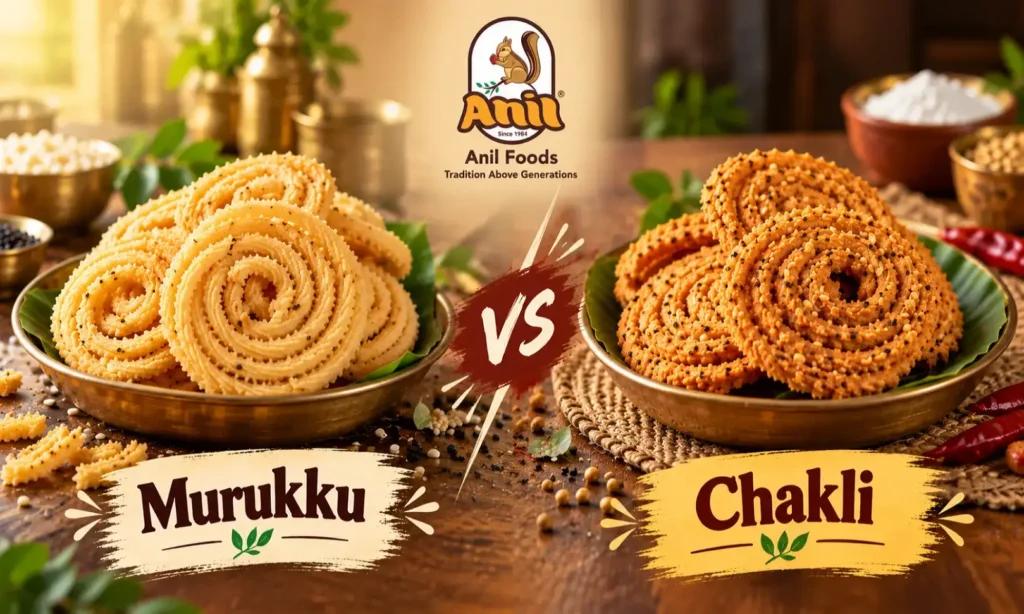
Murukku and chakli are closely related Indian savoury snacks. Both are made from flour-based dough, shaped using a press and deep-fried until crisp.
The main difference is usually the regional recipe, flour combination, seasoning and terminology.
| Murukku | Chakli |
|---|---|
|
Commonly associated with South Indian cuisine
|
Commonly associated with Western and Central Indian cuisine
|
|
Rice flour is often a major ingredient
|
Flour combinations can include rice, gram, wheat or lentil flours
|
|
Common varieties include Thenkuzhal, Kai Murukku and Mullu Murukku
|
Varieties and names differ across regions
|
|
Often seasoned with cumin, sesame and asafoetida
|
Seasonings can include chilli, sesame and other spices
|
|
Strongly associated with South Indian festivals
|
Popular during festivals such as Diwali across several regions
|
The distinction is not always absolute. Recipes vary between families and regions, and the same type of snack may be known by different names.
In simple terms, murukku and chakli belong to the same broader family of crispy, pressed Indian savoury snacks, but their traditional recipes and regional identities differ.
Murukku Variations to Try at Home
Once you are comfortable with the basic murukku recipe, you can experiment with different flavours and ingredients.
Classic Rice Murukku
A simple combination of rice flour, urad dal flour, salt, cumin, sesame seeds and asafoetida creates a traditional savoury murukku with a crisp texture.
Butter Murukku
Adding butter to the dough gives the murukku a richer flavour and a more delicate texture. It is particularly popular for festive preparations.
Spicy Murukku
For a bolder flavour, add red chilli powder to the basic dough. Adjust the quantity according to your preferred level of heat.
Garlic Murukku
Garlic adds a stronger savoury aroma and creates a distinctive variation of the traditional snack.
Curry Leaf Murukku
Finely chopped or ground curry leaves add fragrance and a fresh, savoury note to the dough.
Millet Murukku
A portion of millet flour can be incorporated into the dough for a contemporary variation. The flour ratio may need to be adjusted depending on the type of millet used.
How to Store Homemade Murukku
Proper storage is important if you want to maintain the crisp texture.
Allow the murukku to cool completely before storing it. Transfer it to a clean, dry and airtight container and keep it away from moisture, heat and direct sunlight.
For general guidance on safe food handling and storage, refer to FSSAI food safety guidelines.
When Is Murukku Traditionally Prepared?
Murukku is particularly popular during festive occasions and family celebrations.
It is commonly prepared for:
- Diwali
- Krishna Jayanthi
- Pongal
- Karthigai Deepam
- Weddings
- Family gatherings
- Special occasions
However, murukku does not have to be reserved for festivals. It is equally enjoyable as an everyday tea-time snack.
How to Serve Murukku
Murukku is delicious on its own and requires very little accompaniment.
Serve it with:
- South Indian filter coffee
- Tea
- Homemade savoury mixtures
- Traditional festive snack platters
For festivals and family gatherings, different murukku varieties can be served together with traditional sweets to create a complete snack platter.
Frequently Asked Questions About Murukku
1. What is murukku made of?
Murukku is commonly made using rice flour and urad dal flour, along with ingredients such as salt, cumin, sesame seeds, asafoetida and butter, depending on the recipe.
2. Which flour is best for making murukku?
Rice flour is commonly used as the main flour because it helps provide the characteristic crisp texture. Urad dal flour is often added for flavour and texture.
3. Why does murukku absorb too much oil?
Murukku can absorb excess oil when the frying temperature is too low, the dough contains too much moisture or the pan is overcrowded.
4. Why does murukku break while pressing?
A dry or stiff dough can crack while being pressed. Add a small amount of water, knead gently and check the consistency before pressing again.
5. How do I make crispy murukku?
Use a well-balanced flour mixture, prepare a soft but non-sticky dough, maintain a steady frying temperature and allow the murukku to cool completely before storing.
6. Can murukku be made without a murukku press?
Yes. Traditional varieties such as Kai Murukku can be shaped by hand. However, a murukku press makes it easier to create consistent shapes for most varieties.
7. How should homemade murukku be stored?
Cool the murukku completely and store it in a clean, dry, airtight container. Protect it from moisture to retain its crunch.
8. Is murukku only prepared during festivals?
No. Although murukku is strongly associated with festivals such as Diwali and Krishna Jayanthi, it is also enjoyed throughout the
Final Thoughts
Murukku may be made with a handful of familiar ingredients, but getting the texture right depends on the details. Choosing a suitable flour combination, preparing the dough to the right consistency and maintaining steady oil temperature can make a noticeable difference to the final result.
From delicate Thenkuzhal and Butter Murukku to traditional Kai Murukku and crunchy Mullu Murukku, there are plenty of varieties to explore. Whether you are preparing a festive batch or simply making a snack for tea time, a few simple techniques can help you achieve crisp, flavourful murukku at home.
If you want to simplify the preparation, a ready murukku flour blend can also make it easier to get started.
Table of Contents