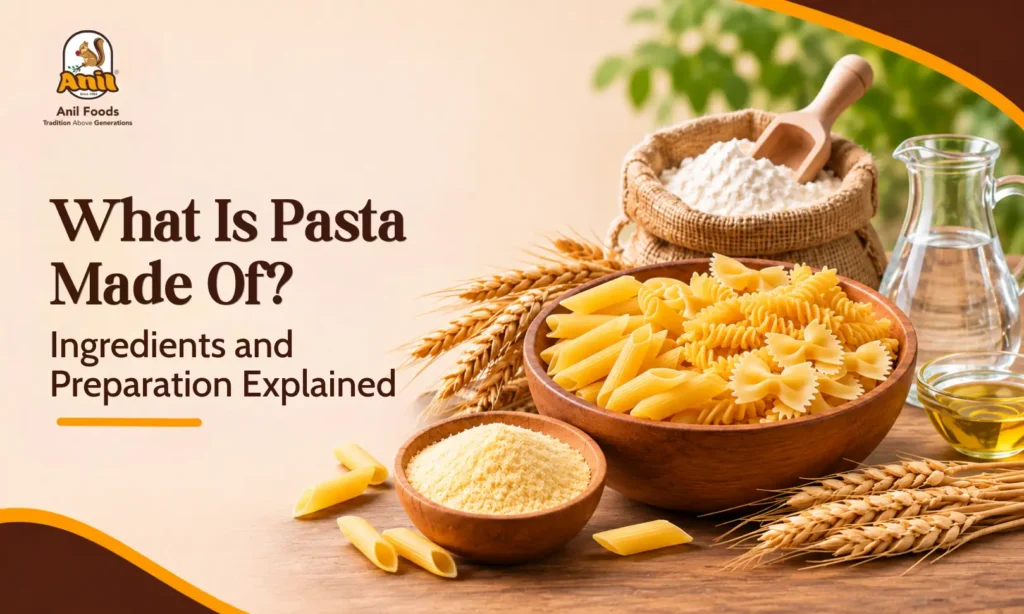
A bowl of pasta may look simple, but have you ever stopped to wonder what goes into making those little shapes we enjoy so much? Is it just flour and water, or are there other ingredients that give pasta its familiar taste and texture? If you’ve ever wondered what pasta is made of, the answer is more interesting than you might expect.
There are several stages which go into making pasta which includes selecting the right wheat, mixing, shaping and drying the dough. Pasta undergoes several steps before reaching your kitchen. While traditional pasta involves just a few basic ingredients, the way they are combined and processed makes a difference to the final product.
What Is Pasta? Understanding the Basics
Pasta is a popular food made from flour, usually durum wheat semolina, and water. The mixture is prepared into a dough, shaped into different forms and cooked before serving. Originally popular in Italian cuisine, pasta is now enjoyed around the world in many different ways. You can also explore our article about different pasta shapes and varieties to learn more.
Pasta can be served with different sauces, vegetables, cheese and other ingredients, making it suitable for a variety of meals. It is also available in different shapes and sizes, depending on how the dough is prepared.
What Are the Main Ingredients Used to Make Pasta?
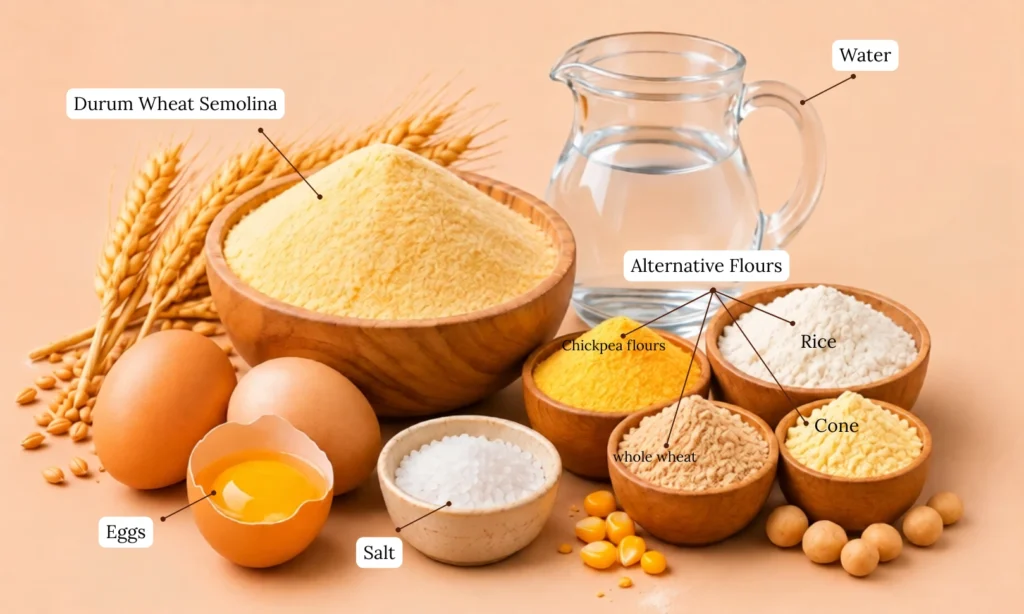
Have you ever wondered why some pasta tastes and feels different from others? The ingredients used play an important role in making pasta. The traditional pastas are usually made of just durum wheat semolina and water. Whereas, some other recipes of pastas use eggs or other types of flour. Each ingredient adds something new to the final product, which may be anything like its texture, firmness or its taste.
| Ingredient | Purpose in Pasta |
|---|---|
|
Durum Wheat Semolina |
Provides structure and firmness to the dough. Its proteins help develop gluten, which contributes to pasta’s texture.
|
|
Water |
Combine with the flour or semolina to form a workable dough.
|
|
Eggs
|
Add moisture, richness and colour to certain pasta varieties, especially egg-based fresh pasta.
|
|
Salt |
Adds flavour in some recipes, although it is often added to the cooking water instead.
|
|
Alternative Flours
|
Rice, corn, whole wheat and chickpea flours are used to make different pasta varieties, including some gluten-free options.
|
How Do These Ingredients Work Together?
When semolina or flour is mixed with water, it forms a dough that can be kneaded and shaped. The protein in wheat helps develop gluten, which gives the dough its structure. Depending on the recipe, eggs and other ingredients can also change the dough’s texture, colour and consistency.
Pasta Origins, Interesting Facts and What Its Names Mean
Pasta has some interesting meanings behind its name and the names of its different varieties. Here are a few terms and their meanings:
| Pasta Term | Meaning or Interesting Fact |
|---|---|
|
Pasta |
An Italian word referring to dough or paste.
|
|
Spaghetti |
Comes from spago, meaning string or thin cord.
|
|
Penne
|
Named after a quill or feather pen because of its angled ends.
|
|
Farfalle |
Means butterflies in Italian.
|
|
Macaroni
|
Known in Italian as maccheroni, a name associated with a traditional pasta variety. |
|
Ravioli
|
Refers to small pasta parcels usually filled with ingredients such as cheese or vegetables.
|
|
Lasagna
|
Refers to wide, flat sheets of pasta used in layered dishes.
|
|
Vermicelli
|
An Italian word meaning little worms, referring to its thin, long shape.
|
From Dough to Plate: How Is Pasta Made?
Ever wondered how a few simple ingredients turn into the pasta we cook at home? The process starts with preparing the dough and involves a few steps before the pasta is ready for packaging.
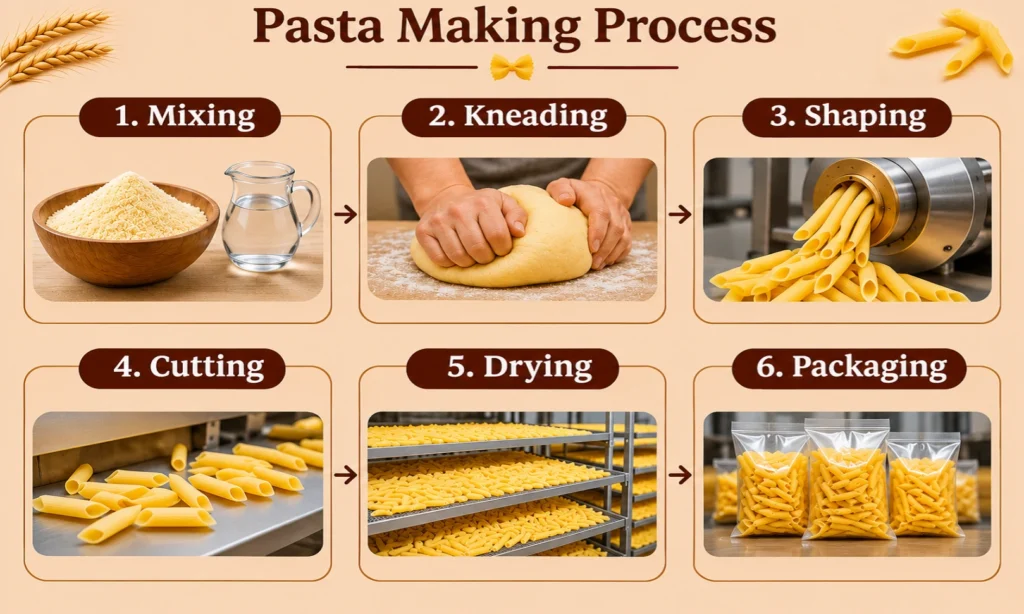
Here’s how commercially produced dried pasta is made:
| Steps | Process | What Happens? |
|---|---|---|
|
1. Mixing
|
Combining ingredients
|
Durum wheat semolina and water are mixed to form a dough.
|
|
2. Kneading
|
Preparing the dough
|
The dough is worked until the ingredients are evenly combined and it reaches the right consistency.
|
|
3. Shaping
|
Giving pasta its form
|
The dough is passed through special moulds called dies to create different pasta shapes.
|
|
4. Cutting
|
Creating Pasta Pieces
|
The shaped pasta is cut into the required lengths and sizes.
|
|
5. Drying |
Reducing moisture
|
The shaped pasta is carefully dried to remove excess moisture and help it last longer.
|
|
6. Packaging
|
Getting it ready for sale
|
The dried pasta is checked, packed and prepared for distribution.
|
The pasta doughs are put into specially designed machines to get the required shape and thickness. The drying stage is equally important for dried pasta, as moisture needs to be reduced carefully to help maintain its quality during storage. Once dried, the pasta is checked and packed for distribution.
The process may vary depending on the type of pasta being produced. Fresh pasta, for instance, is generally prepared without the extended drying stage used for dried varieties.
Fresh Pasta vs Dried Pasta: What's the Difference?
Did you know the storage process for pastas also differs. Some varieties are prepared fresh and enjoyed soon after making, while others are dried and packed for longer storage. So, what makes fresh pasta different from dried pasta?
| Fresh Pasta | Dried Pasta |
|---|---|
|
Usually eaten soon after it is made. |
Dried to remove moisture and keep it fresh for longer.
|
|
Has a soft and tender texture.
|
Has a firm texture before cooking.
|
|
Can be made with flour and eggs or just flour and water.
|
Usually made with durum wheat semolina and water.
|
|
Usually needs to be stored in the refrigerator.
|
Can be stored at room temperature in a sealed pack.
|
|
Does not stay fresh for very long.
|
Stays fresh for a longer time when stored properly. |
Fresh pasta is often used in dishes where a soft, delicate texture is preferred. Dried pasta, on the other hand, is a best choice for everyday meals because it can be stored for longer and prepared whenever needed. Both can be used in different recipes depending on the desired texture and cooking time.
How to Store Pasta and Keep It Fresh
Storing pasta properly helps maintain its quality and keeps it fresh for longer. The storage method depends on the type of pasta you have.
- Unopened dried pasta: Store it in a cool, dry place away from direct sunlight.
- Opened dried pasta: Keep it in an airtight container to protect it from moisture.
- Fresh pasta: Store it in the refrigerator and follow the storage instructions on the package.
- Cooked pasta: Place it in a covered container and refrigerate it within two hours.
Always check the product packaging for specific storage instructions and use-by dates.
FSSAI’s food labelling guidelines specify the importance of displaying use-by dates and relevant storage conditions on packaged food. Always check the product label before storing or consuming it.
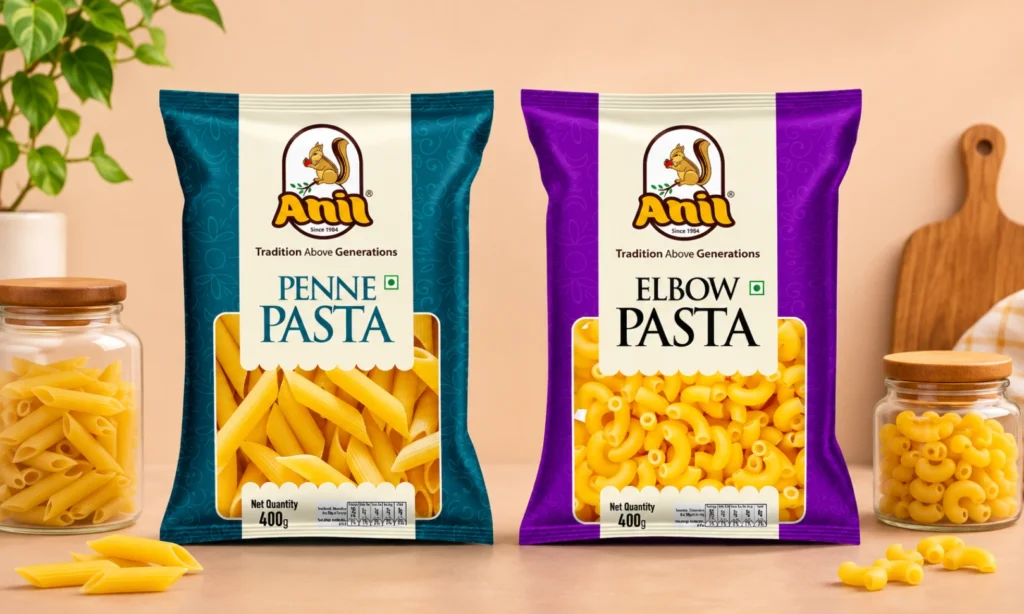
Explore Anil Foods' Pasta Range
Anil Foods offers two pasta varieties to add to your favourite meals. Whether you prefer classic tube-shaped pasta or small curved pieces, you can explore these options:
– Penne Pasta: Tube-shaped pasta with diagonally cut ends, suitable for a variety of pasta dishes.
– Elbow Pasta: Small, curved pasta pieces that work well in different recipes.
Both varieties are available in 200g and 400g packs, making them convenient options for everyday cooking.
Conclusion
Pasta is made using simple ingredients, but each step in its preparation contributes to its taste and texture. Now that you know what goes into making pasta, explore Anil Foods’ range and find the right pasta for your favourite meals.
You can also explore Anil Foods’ other products and discover more options for your everyday cooking needs.
Frequently Asked Questions
1. Is pasta made of maida or wheat?
Traditional pasta is usually made from durum wheat semolina, while some varieties use refined wheat flour (maida).
2. What is pasta made of?
Pasta is mainly made from durum wheat semolina and water. Some varieties also contain eggs or alternative flours.
3. Is pasta good for health?
Yes, pasta can be part of a balanced diet when eaten in suitable portions with nutritious ingredients.
4. Is pasta healthier than bread?
Neither is automatically healthier. It depends on the ingredients, type and portion size.
5. Is 100% whole wheat pasta healthy?
Yes, 100% whole wheat pasta can be a healthy choice. It contains more fibre than pasta made with refined flour.
6. Which pasta has no wheat?
Rice, corn, chickpea and lentil-based pasta are some wheat-free alternatives.
Table of Contents