While global dietary trends are currently pivoting back toward ancient grains, The Anil Group has been perfecting the industrial processing of Finger Millet since 1984. Understanding ragi flour benefits requires a departure from modern refined cereal logic and a return to nutrient-dense, complex grain structures.
In this generation, few ancient grains have sustained their clinical relevance as effectively as Finger Millet, popularly known as ragi. Since 1984, The Anil Group has been at the forefront of processing this “super-grain,” ensuring that the transition from farm to table preserves the complex structural integrity of the millet. Whether you are a B2B procurement specialist analyzing flour viscosity or a health-conscious consumer seeking low-glycemic alternatives, understanding what is ragi flour is the first step toward optimized metabolic health.
The Nutritional Profile: Decoding Ragi Flour Nutrition
To understand the profound ragi flour benefits, one must first look at the biochemical composition. Ragi is unique among cereals due to its high concentration of Calcium and essential amino acids like Methionine and Lysine.
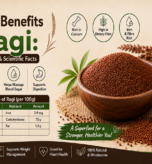
Technical Nutritional Breakdown (per 100g)
| Nutrient | Concentration | Clinical Benefit |
|---|---|---|
|
Calcium |
344 mg |
Bone density & skeletal integrity |
|
Dietary Fiber |
11.5 g |
Glycemic control & satiety |
|
Protein |
7.3 g |
Tissue repair & enzymatic function |
|
Iron |
3.9 mg |
Hemoglobin synthesis |
|
Glycemic Index |
Low (54-68) |
Sustained energy release |
The ragi flour calories are approximately 336 kcal per 100g, but unlike refined wheat, these calories are “slow-burning” due to the complex carbohydrate chains found in ragi millet.
Comprehensive Ragi Flour Benefits
1. Superior Calcium Bioavailability
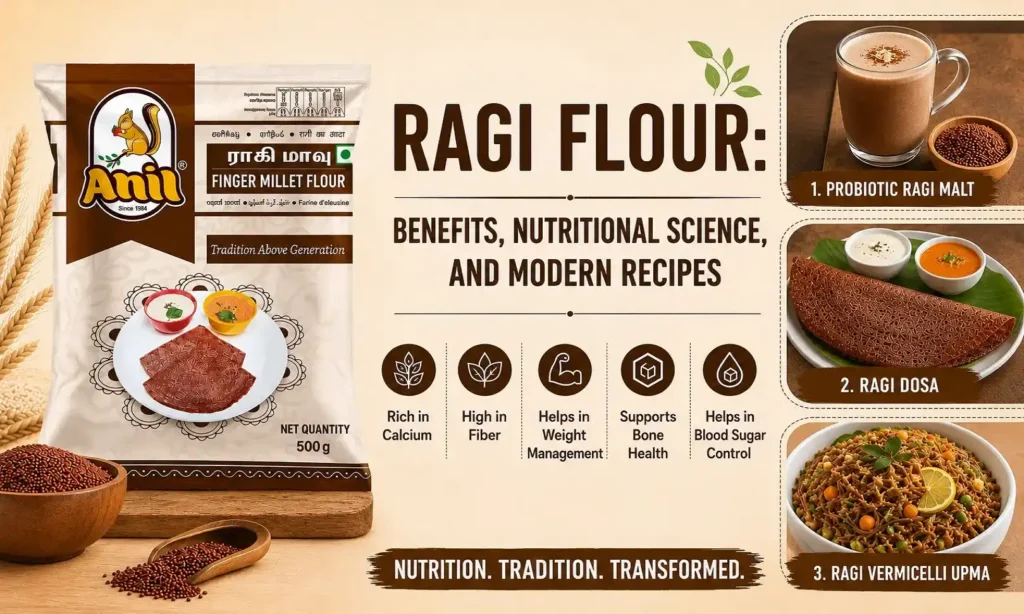
For children and the elderly, ragi benefits are primarily centered on bone health. Ragi contains three times more calcium than milk per gram. This makes Anil Ragi Flour an essential dietary staple for preventing osteoporosis and supporting pediatric growth. You can explore more on this in our technical guide on health benefits of ragi for toddlers.
2. Metabolic and Diabetes Management
The polyphenols and dietary fiber in ragi create a “viscous barrier” in the gut, slowing down the absorption of starch. For those managing Type-2 diabetes, substituting white rice with ragi-based alternatives is a clinically sound strategy. Integrating products like Anil Ragi Vermicelli into your meal plan provides the necessary fiber without sacrificing culinary texture.
3. Natural Iron Source for Anemia
The high iron content in ragi flour acts as a natural intervention for iron deficiency. When consumed alongside Vitamin C (like a squeeze of lemon on ragi dosa), the iron absorption rate significantly increases.
Expert Ragi Flour Recipes: Innovation Meets Tradition
The versatility of the Anil Flour range allows for both traditional South Indian staples and modern fusion dishes.
1. The Ultimate Probiotic Ragi Malt
Ragi malt is the quintessential “health drink.” It is particularly effective for those recovering from illness or for infants.
- Ingredients: 2 tbsp Anil Ragi Flour, 1 cup water/milk, jaggery to taste.
- Method: Mix the flour in cold water to avoid lumps. Cook on a medium flame until it thickens into a glossy paste.
- Elite Tip: For infants, refer to our detailed resource on ragi as a healthy food for babies.
2. Crispy Ragi Dosa (The Modern Breakfast)
Mastering the ragi dosa recipe requires a focus on fermentation and temperature.
- Base: Combine 1 cup ragi flour with ½ cup curd and ½ cup rice flour.
- Alternative: For a faster, standardized result, the Anil Ragi Dosa Mix is engineered for perfect crispness and porosity.
- Pairing: Serve with coconut chutney to balance the earthy flavor of the millet.
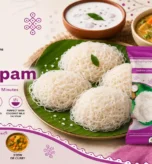
3. Ragi Vermicelli Upma
If you are looking for ragi flour recipes that offer a different texture, switching to vermicelli is ideal.
- Instructions: Steam the Ragi Vermicelli for 3 minutes. Sauté with mustard seeds, curry leaves, and finely chopped vegetables.
- Technical Note: Anil’s proprietary milling process ensures the vermicelli does not become sticky, a common issue with lower-grade millet products.
Ragi Flour Price and Sourcing
When evaluating the ragi flour price, industrial buyers and retail consumers must look beyond the sticker cost. The value lies in the purity and the milling standard. Adulterated flours often contain fillers that spike the glycemic index. By sourcing directly from The Anil Group Shop, you ensure a product that has undergone rigorous quality control and technical enzymatic testing.
B2B and B2C Perspectives
For the B2B industrial partner, ragi flour serves as a robust thickener and nutritional fortifier in processed foods. Its high water-binding capacity makes it an excellent addition to gluten-free bakery lines.
For the B2C consumer, ragi is a lifestyle choice. Whether it’s a simple ragi dosa for a quick Tuesday dinner or a sophisticated ragi-based dessert, the integration of this grain is a commitment to longevity. For more recipe inspiration and a deeper dive into the science, visit our legacy blog on health benefits of ragi and recipes.
Conclusion: The Elite Standard of Finger Millet
In 2026, the global shift toward “ancient grains” is not just a trend; it is a metabolic necessity. The Anil Group continues to bridge the gap between traditional wisdom and modern industrial excellence. From the stone-ground texture of our flour to the precision of our vermicelli, every product is a testament to our authority in the food processing industry.
Frequently Asked Questions (FAQs)
1. Is ragi flour gluten-free?
Yes, ragi is naturally gluten-free. This makes Anil Ragi Flour an ideal alternative for individuals with Celiac disease or gluten sensitivity.
2. Can I eat ragi every day?
Absolutely. Due to its low glycemic index and high fiber content, ragi is safe for daily consumption. It provides sustained energy without causing insulin spikes.
3. Is ragi better than wheat?
In terms of calcium, fiber, and mineral content, ragi significantly outperforms refined wheat. It is particularly superior for those managing weight or diabetes.
4. How do I prevent ragi flour from becoming bitter?
Bitterness usually occurs due to oxidation. Ensure you store your flour in an airtight container and use fresh, high-quality products like those from the Anil Flour category.
5. Is ragi good for weight loss?
Yes. The high levels of tryptophan (an amino acid) and dietary fiber promote satiety, reducing the urge for overeating.
6. At what age can I introduce ragi to my baby?
Ragi is one of the best first foods for infants. It can be introduced around 6 months of age in the form of a thin porridge. See our guide on ragi for toddlers for more details.
7. Does ragi help in increasing height?
While height is largely genetic, ragi provides the massive amounts of Calcium and Vitamin D-precursors necessary for optimal bone growth during developmental years.
8. Can I use ragi flour for baking?
Yes, though it lacks gluten, it can be blended with other flours to make nutritious cookies, cakes, and breads.
9. What is the difference between Ragi Flour and Ragi Dosa Mix?
Our Ragi Dosa Mix is a pre-formulated blend designed for the specific fermentation and texture requirements of a dosa, whereas the pure flour is a versatile ingredient for multiple recipes.
10. Where can I buy authentic, high-quality ragi products?
You can purchase the entire range, including vermicelli, flour, and instant mixes, directly from the Anil Shop.
Table of Contents