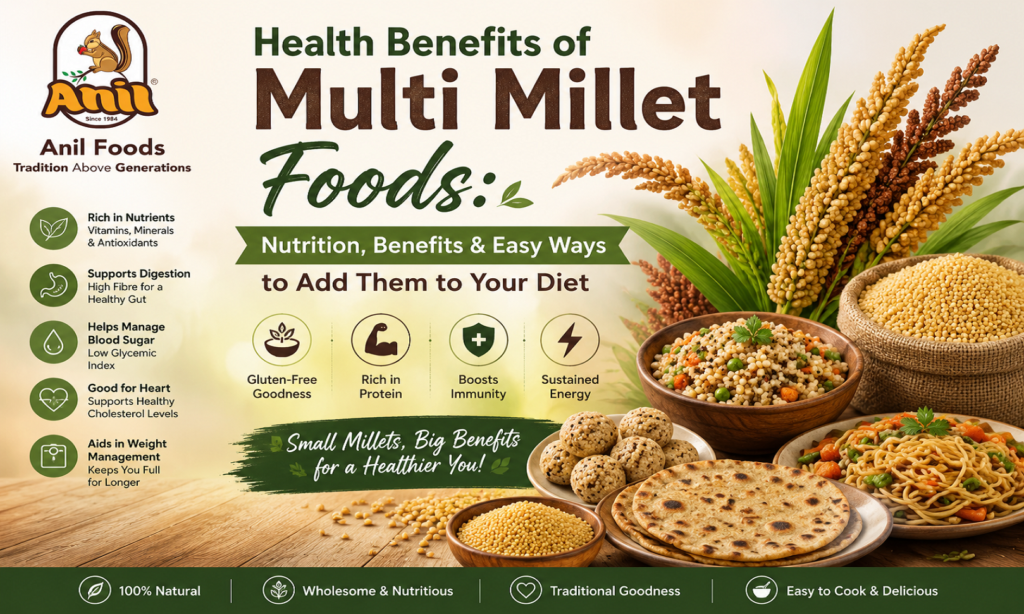
Millets have been part of Indian food traditions for generations, but they are now gaining renewed attention as people look for nutritious, wholesome, and versatile foods. From ragi and sorghum to kodo millet and pearl millet, each variety offers its own nutritional qualities.
Instead of depending on just one type of millet, including different millets in your diet can bring greater variety to your meals. Multi millet foods combine two or more millet varieties to create nutritious and filling options that can be enjoyed as breakfast, snacks, or everyday meals.
Whether you want to add more fiber to your diet, explore traditional grains, or simply make your everyday meals more varied, multi millet foods can be a simple addition to a balanced eating routine.
What Are Multi Millet Foods?
Multi millet foods are made using a combination of different millet varieties rather than using only one grain. Depending on the recipe or product, they may contain millets such as ragi, sorghum, pearl millet, foxtail millet, or kodo millet.
Each millet has a slightly different taste, texture, and nutritional profile. Combining them can make meals more interesting while helping you include a wider range of traditional grains in your diet. The Food Safety and Standards Authority of India (FSSAI) recognises millets such as ragi, sorghum, pearl millet, foxtail millet and kodo millet as “Nutri-Cereals.”
Why Include Different Millets in Your Diet?
Eating a variety of grains is an easy way to bring more diversity to your meals. Different millets contain different proportions of nutrients, fibre, and plant compounds.
Thus multi millet foods are beneficial for those who want to move away from refined grains and include more traditional whole grains in everyday cooking.
And they are flexible. You can use millet blends to make dosa, porridge, rotis, upma, snacks, idli or any other Indian recipes you are familiar with depending on the ingredients you use.
10 Health Benefits of Multi Millet Foods
1. Supports Better Digestion
Many millets contain dietary fibre, which plays an important role in maintaining healthy digestion. Fibre adds bulk to food and can support regular bowel movements.
Including millet-based foods as part of a balanced diet can therefore be a simple way to increase your overall fibre intake. Remember to drink enough water when increasing fibre in your diet.
2. Helps You Feel Full for Longer
Fibre-rich foods generally take longer to digest and can help you feel satisfied after eating. This can make it easier to manage unnecessary snacking between meals.
A multi millet breakfast paired with vegetables, pulses, curd, or another protein source can make a more balanced and satisfying meal.
3. Provides Important Minerals
Millets can contribute important minerals such as iron, magnesium, phosphorus, and zinc, although the exact amounts vary depending on the millet variety and preparation method.
For example, ragi is particularly recognised for its calcium content. If you want to understand ragi in more detail, explore our guide to ragi flour benefits.
4. Supports Steady Energy
Millets provide carbohydrates, which are the body’s main source of energy. Because many millet-based foods also contain fibre, they can be a satisfying alternative to highly refined carbohydrate foods.
Choosing minimally processed millet foods and combining them with protein, vegetables, and healthy fats can help create a more balanced meal.
5. May Support Healthy Blood Sugar Management
The fibre and nutrient composition of whole grains can play a role in a balanced diet for blood sugar management. Some millet varieties may have a lower glycaemic impact than certain refined grain foods, depending on the variety, processing, cooking method, and portion size.
However, multi millet foods are not a replacement for medical treatment or a diabetes-friendly meal plan prescribed by a healthcare professional.
6. Can Support Heart-Friendly Eating
A diet that includes whole grains, fibre-rich foods, vegetables, fruits, nuts, and pulses can contribute to overall heart health.
Replacing some highly refined grain foods with whole or minimally processed millet-based options can be one practical way to increase whole-grain variety in your diet.
7. Naturally Gluten-Free
Millets are naturally gluten-free grains and are a useful alternative to wheat for those who need to avoid gluten.
However, for people with celiac disease or avoiding gluten, it is important to read product labels and check manufacturing processes, as cross-contamination can happen during processing.
8. Adds Variety to Everyday Meals
One of the biggest advantages of multi millet foods is variety. Instead of eating the same grain every day, you can rotate different millet combinations and cooking methods.
Ragi, sorghum, kodo millet, pearl millet, and other traditional grains can each bring a different flavour and texture to familiar dishes.
You can also learn more about the nutritional qualities of pearl millet and its benefits before adding it to your regular meal rotation.
9. Makes Traditional Grains Easier to Enjoy
Millets do not have to be complicated. They can be used in familiar Indian dishes such as dosa, idli, upma, porridge, roti, and snacks.
For families who are new to millets, starting with familiar recipes can make the transition easier and more enjoyable.
10. Fits Well Into a Balanced Lifestyle
Healthy eating does not mean completely changing your food habits overnight. Small, practical changes can make a difference over time.
Adding multi millet foods to breakfast, replacing one refined-grain meal occasionally, or trying a millet-based snack can be simple ways to introduce more variety into your diet.
The ICMR-NIN Dietary Guidelines for Indians 2024 also emphasise healthy dietary practices and the importance of choosing a variety of foods as part of an overall balanced eating pattern.
Nutritional Benefits of Different Millets
Different millet varieties offer different nutritional characteristics. Here is a simple overview:
| Millet | Known For | Easy Ways to Use It |
|---|---|---|
|
Ragi |
Calcium, fibre and iron |
Dosa, porridge, roti, malt |
|
Sorghum (Cholam) |
Fibre and minerals |
Roti, dosa, porridge, meals |
|
Kodo Millet (Varagu) |
Fibre and whole-grain nutrition |
Rice replacement, upma, pongal |
|
Pearl Millet (Kambu) |
Iron, magnesium and fibre |
Roti, porridge, dosa
|
|
Foxtail Millet (Thinai) |
Fibre and plant-based nutrients |
Upma, pongal, dosa, rice-style meals |
The exact nutritional value can vary according to the millet variety, processing method, recipe, and serving size. The goal is not to focus on one “best” millet but to enjoy a variety of nutritious grains.
How to Add Multi Millet Foods to Your Daily Diet
You don’t need to completely replace rice or wheat to enjoy the benefits of millets. Start gradually and experiment with familiar dishes.
1. Multi Millet Dosa
A millet-based dosa is an easy way to introduce different grains into breakfast.
How it’s made:
- Choose a suitable multi millet flour or millet combination.
- Mix it with water to create a smooth batter.
- Add salt and allow the batter to rest or ferment if the recipe requires it.
- Pour the batter onto a hot tawa and spread it into a thin dosa.
- Cook until crisp and serve with chutney or sambar.
2. Multi Millet Porridge
Porridge is one of the simplest ways to enjoy millet.
How it’s made:
- Millet flour is mixed with some water to make a smooth paste.
- Add mixture to boiling water or milk, stirring.
- Cook on low heat until it reaches your preferred consistency.
- Add fruits, nuts, seeds or a little jaggery if you like.
It can be enjoyed as a warm breakfast or a light meal.
3. Millet Upma
Millet upma is a familiar Indian breakfast that can be made using cooked millet or millet-based products.
How it’s made:
- Cook the millet according to the instructions.
- Prepare a simple tempering using ingredients such as mustard seeds, curry leaves, onion, and vegetables.
- Add the cooked millet.
- Mix everything together and season with salt.
- Serve warm with chutney or curd.
Adding vegetables makes the meal more colourful and increases its overall nutritional variety.
4. Millet Roti
Millet flour can also be used to prepare rotis.
How it’s made:
- Mix millet flour with warm water and a pinch of salt.
- Knead gently to form a soft dough.
- Take a small portion and flatten it carefully.
- Cook on a hot tawa until both sides are properly cooked.
- Serve with vegetables, dal, curd, or a suitable side dish.
Ragi, pearl millet, and sorghum can all be explored in different roti recipes.
5. Millet Snacks
Millet flour can be used in the preparation of homemade snack items such as crackers, baked snack items, laddoos or savory preparations.
The trick is to balance the ingredients and not just assume that a millet-based snack is healthy by default. And added sugar, salt and fats still count.
Tips for Eating Multi Millet Foods
- Start with small portions if you are not accustomed to high-fibre foods.
- Drink enough water throughout the day.
- Combine millet foods with vegetables, pulses, nuts, seeds, or other protein sources.
- Rotate different millet varieties rather than depending on only one type.
- Choose minimally processed options whenever possible.
- Pay attention to portion sizes, especially when eating packaged millet snacks.
- If you have a specific medical condition or dietary restriction, follow advice from your healthcare professional.
Are Multi Millet Foods Good for Children?
Millets can be part of a healthy and balanced diet for children. Their mineral and fiber content can complement other nutritious foods.
For younger kids, you can make millet softer in the form of porridge, dosa, idli or other dishes suitable for their age. The meal must include a variety of vegetables, fruits, pulses, dairy or appropriate substitutes, and protein-rich foods.
As with any food, there should be variety. Children don’t have to eat only millet-based food to be healthy.
Can You Eat Multi Millet Foods Every Day?
Yes, millet can be included regularly as part of a varied diet. However, eating a wide range of grains, vegetables, fruits, pulses, nuts, and other foods is generally a better approach than choosing heavily on one food group.
You can rotate millet varieties across different meals. For example, you could have ragi dosa one day, sorghum roti another day, and kodo millet upma later in the week.
This makes meals more interesting while helping you enjoy the different qualities of traditional grains.
Possible Considerations When Eating Millets
Although millets are nutritious, more is not always better.
Some people may experience gas, bloating, or digestive discomfort when they suddenly increase their intake of fibre-rich foods. Starting gradually can help your body adjust.
People with specific health conditions, food allergies, or dietary restrictions should also choose millet products carefully and speak with a qualified healthcare professional when necessary.
It is also important to remember that the health value of a millet dish depends on the complete recipe. A dish made with millet can still be high in added sugar, salt, or fat depending on how it is prepared.
Multi Millet Foods vs. Single Millet Foods
Single millet and multi millet foods can both have a place in a well-rounded diet.
With a single-millet food you can taste the specific taste and nutritional properties of that one grain. Whereas, a multi millet food is a mixture of different varieties and can provide more variety in taste and ingredients.
For example, ragi is especially good if you want a calcium-rich option among millets, and mixing ragi with sorghum, pearl millet or kodo millet gives you a wider choice of traditional grains.
Ultimately, your personal preference, your eating pattern, your nutritional needs and the recipe you are preparing will determine the best choice.
Multi Millet Foods and a Healthy Diet
Adding millets to your meals is most useful when they are part of an overall varied eating pattern. The World Health Organization (WHO) recommends that healthy diets be based on principles such as adequacy, balance, moderation, and diversity. WHO also lists millet among examples of whole-grain carbohydrate sources.
You can read the latest WHO guidance on a healthy diet to learn more about building a varied and balanced eating pattern.
This approach means enjoying millet alongside vegetables, fruits, pulses, nuts, seeds, dairy or other protein sources rather than treating millet as a complete solution for nutrition.
Conclusion
Multi millet foods offer a simple way to bring more traditional grains and variety into everyday meals. From ragi and sorghum to kodo millet and pearl millet, each variety has its own nutritional characteristics and can be used in a wide range of familiar Indian dishes.
Including millet foods in your diet may support better fibre intake, provide important minerals, offer sustained energy, and make everyday meals more diverse. The key is to enjoy them as part of a balanced diet rather than treating any single food as a complete solution for health.
Whether you start with a simple millet dosa, a warm bowl of porridge, a wholesome upma, or a traditional millet roti, there are plenty of easy ways to make these grains part of your regular meals.
Want more ideas for healthy and delicious millet dishes? Explore the Anil Foods blog for more guides, recipes, and everyday nutrition ideas.
Frequently Asked Questions (FAQs)
1. What are multi millet foods?
Multi millet foods are prepared using two or more millet varieties. They may include combinations of ragi, sorghum, pearl millet, kodo millet, foxtail millet, and other traditional grains.
2. What are the main health benefits of multi millet foods?
They can provide dietary fiber, carbohydrates, and important minerals while adding greater variety to your diet. Their benefits depend on the millet varieties used and how the food is prepared.
3. Can I eat multi millet foods every day?
Yes. Millets can be eaten regularly as part of a balanced and varied diet. It is still important to include vegetables, fruits, pulses, protein sources, and other whole foods.
4. Are multi millet foods gluten-free?
Millets are naturally gluten-free. However, packaged products may be exposed to gluten during processing, so people who need strict gluten avoidance should check labels and manufacturing information.
5. Which millets can be combined together?
Ragi, sorghum, pearl millet, kodo millet, foxtail millet, and other varieties can be combined depending on the recipe. Different combinations provide different flavours and textures.
6. Are multi millet foods good for weight management?
Millet foods can be useful in a weight-management diet because many millets contain fibre and can be filling. However, total calorie intake, portion size, preparation method, and the rest of the diet also matter.
7. Can children eat multi millet foods?
Yes. Millet can be included in children’s meals in suitable forms such as porridge, dosa, idli, and other soft foods. A child’s overall diet should remain varied and nutritionally balanced.
8. Is ragi better than other millets?
There is no single millet that is best for everyone. Ragi is particularly known for its calcium content, while other millets offer different nutritional qualities. Eating a variety of millets can be a practical approach.
9. How can I start eating more millet foods?
Start with familiar dishes such as dosa, porridge, upma, roti, or idli. You can gradually introduce different millet varieties into your weekly meal routine.
Table of Contents