The revival of ancient grains in the South Indian kitchen is more than a culinary trend; it is a return to a lifestyle of metabolic optimization. Among these grains, Kodo millet, known as varagu in Tamil, stands out as a nutritional powerhouse with a history spanning thousands of years. While modern diets have leaned heavily on refined white rice, the “Millet Revolution” is reintroducing the scientific and holistic value of this resilient grain.
At its core, what is kodo millet? Botanically classified by the kodo millet scientific name Paspalum scrobiculatum, this grain was traditionally valued for its ability to grow in arid conditions while packing a dense concentration of micronutrients. Today, it is the cornerstone for those seeking to balance modern pace with traditional wellness.
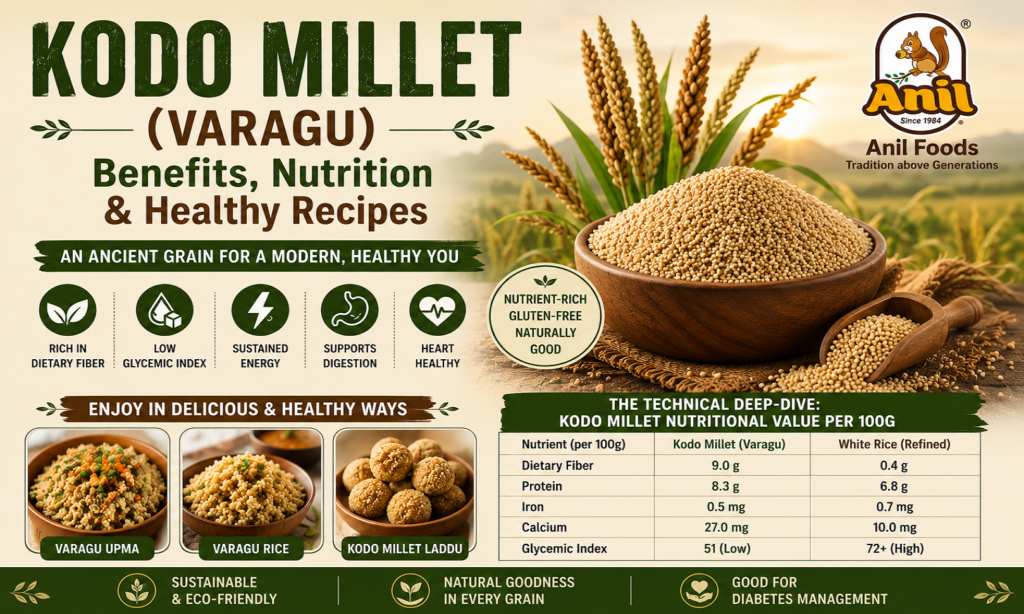
The Technical Deep-Dive: Kodo Millet Nutritional Value per 100g
To appreciate varagu rice benefits, one must look at the data. Unlike refined grains that offer “empty” calories, Varagu provides a complex matrix of fiber, minerals, and polyphenols.
| Nutrient (per 100g) | Kodo Millet (Varagu) | White Rice (Refined) | Metabolic Advantage |
|---|---|---|---|
|
Dietary Fiber |
9.0 g |
0.4 g |
Superior satiety & digestive health |
|
Protein |
8.3 g |
6.8 g |
Enhanced muscle repair
|
|
Iron |
0.5 mg
|
0.7 mg |
Natural energy support |
|
Calcium |
27.0 mg |
10.0 mg |
Skeletal integrity |
|
Glycemic Index |
51 (Low) |
72+ (High) |
Sustained glucose management |
The kodo millet glycemic index is perhaps its most significant feature. With a GI of approximately 51, it falls squarely into the “Low-GI” category, making it an essential tool for diabetes control. By slowing the release of sugar into the bloodstream, it prevents the sharp insulin spikes associated with polished grains.
Why Varagu Matters: Key Kodo Millet Benefits
1. Metabolic Optimization & Weight Management
The high fiber content in varagu does more than just aid digestion. It creates a “slow-release” energy system. For those focused on weight management, the satiety provided by Kodo millet reduces the urge for mid-day snacking, naturally lowering daily caloric intake. This is why many are switching to Anil Varagu Vermicelli as a light yet fulfilling dinner option.
2. Rich in Antioxidants
Varagu is a significant source of polyphenols, specifically tannins and phytic acids, which have been shown to have antioxidant properties. These compounds help neutralize free radicals, supporting cellular health and long-term vitality.
3. Heart Health and Lipid Profile
Research into varagu rice benefits suggests that regular consumption can assist in maintaining healthy cholesterol levels. The presence of lecithin and high magnesium levels contributes to cardiovascular strength and regulated blood pressure. You can explore how this contributes to staying active in our Energy & Stamina Guide.
Bringing Tradition to the Modern Table: Kodo Millet Recipes
Integrating kodo millet in tamil households is seamless because it mirrors the texture and utility of rice. However, it offers a richer, nuttier flavor profile.
The Perfect Varagu Dosai
If you are looking for a crispy, nutritious start to your day, the kodo millet recipes for breakfast are endless.
- The Method: Traditionally, one would soak Varagu and Urad Dal in a 3:1 ratio.
- The Modern Way: For a consistent, expert-level crunch without the 8-hour wait, the Anil Varagu Dosai Mix is engineered to provide the perfect fermentation profile every time.
- Serving Suggestion: Pair with a spicy tomato chutney to complement the earthy notes of the millet.
Lemon Varagu Vermicelli (Quick Lunch)
For a light, refreshing lunch that won’t lead to a “food coma,” lemon-tempered Varagu is ideal.
- Sauté mustard seeds, green chilies, and curry leaves.
- Add steamed Varagu Vermicelli and a generous squeeze of fresh lemon.
- This dish is a staple for culinary inspiration that keeps you energetic throughout the afternoon.
A Warm Approach to Industrial Excellence
At The Anil Group, our involvement with millets isn’t just about manufacturing; it’s about heritage. Since 1984, we have watched the South Indian kitchen evolve, yet the fundamental need for “real food” remains the same. We process our Varagu products with a gentle touch to ensure the bran—where the fiber and nutrients live—remains intact.
Whether you are looking for the top 3 benefits of varagu millet or searching for a reliable source of Kodo Millet products, our goal is to provide the quality that mothers and health enthusiasts trust.
Frequently Asked Questions (FAQs)
1. Is Kodo millet (Varagu) good for diabetes?
Yes, due to its low kodo millet glycemic index, it is highly recommended for managing blood sugar levels.
2. What is Kodo millet called in Tamil?
Kodo millet is known as Varagu in Tamil.
3. Does Kodo millet contain gluten?
No, Varagu is naturally 100% gluten-free.
4. How many calories are in 100g of Kodo millet?
Kodo millet contains approximately 353 calories per 100g, mostly from complex, slow-digesting carbohydrates.
5. Can I replace white rice with Varagu?
Yes, it can be used for idlis, dosas, upma, and even variety rice like lemon or curd rice.
6. Is Varagu safe for children?
Absolutely. Its high mineral content makes it excellent for growing children.
7. How do I store Kodo millet products?
Like all natural grains, store in a cool, dry place in an airtight container to maintain freshness.
8. Why is Anil Varagu Vermicelli different?
Our process ensures a non-sticky texture while preserving the nutritional integrity of the grain.
9. Can I make Varagu porridge (Koozh)?
Yes, Varagu koozh is a traditional cooling drink perfect for the South Indian summer.
10. Where can I buy Anil Varagu products online?
You can find the entire range at shop.theanilgroup.com.
Table of Contents