In the search for affordable, plant-based protein, few foods can compete with the nutritional powerhouse known as soya chunks. Often referred to as “vegetarian meat” due to their fibrous, chewy texture, they have become a staple in South Indian households. Whether you are looking to build muscle, manage weight, or simply diversify your family meals, understanding the science behind this ingredient is the first step toward better health.
What are Soya Chunks and How are They Made?
Many people wonder exactly how soya chunks are made. They are a byproduct of soybean oil extraction. Once the oil is removed from the soybeans, the remaining “defatted” soy flour is processed using extrusion technology. During this process, the flour is cooked under high pressure and then shaped into chunks or granules.
The result is a shelf-stable, high-protein product that is naturally low in fat. Because they are dehydrated, they have a long shelf life, making them a convenient pantry essential for quick weeknight dinners.
Soya Chunks Nutrition Facts: The Protein Powerhouse
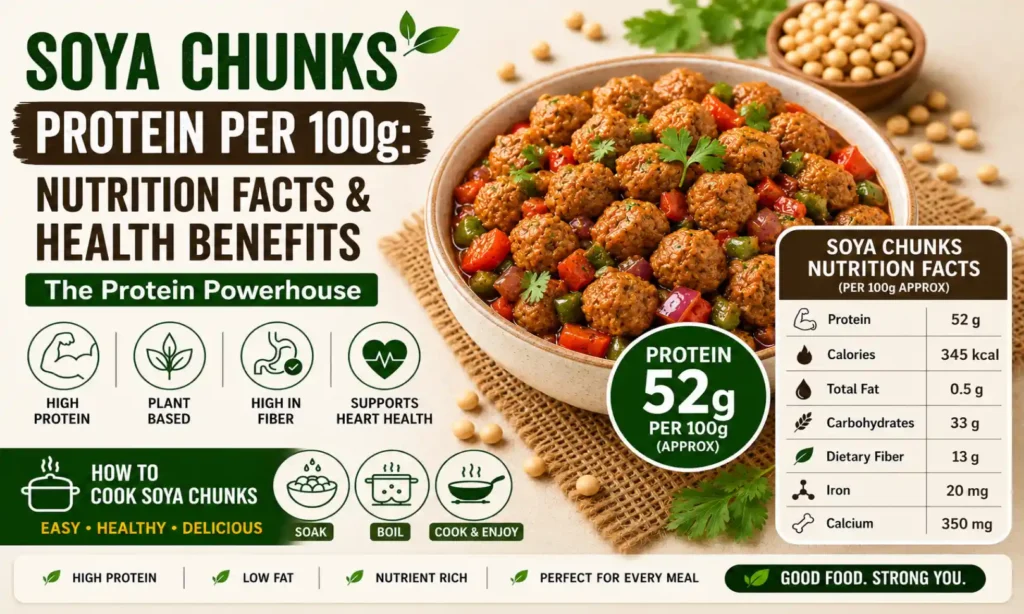
The most frequent question asked by fitness enthusiasts is about the soya chunks protein per 100g. Soya chunks are unique because they contain significantly more protein than meat, eggs, or lentils by weight. If you are tracking your macros, knowing that 100 gm soya chunks protein stands at a staggering 52 grams is a game changer. Even a smaller serving, such as 50 gm soya chunks protein providing 26 grams, offers more than enough to meet a significant portion of your daily requirement. This makes them one of the most fiber rich foods and protein sources available today.
| Nutrient Component | Value per 100g (Approx) |
|---|---|
|
Protein |
52 g |
|
Calories |
345 kcal |
|
Total Fat |
0.5 g
|
|
Carbohydrates |
33 g |
|
Dietary Fiber |
13 g |
|
Iron |
20 mg |
|
Calcium |
350 mg |
The Health Benefits of Anil Soya Chunks
Integrating soya chunks into your diet offers more than just muscle support. Here are the primary reasons they are considered a “superfood”:
- Excellent for Weight Management: With high protein and fiber but almost zero fat, they keep you satiated for longer. This reduces the urge for mid-day snacking, making them ideal high protein foods for weight loss.
- Heart Health: Being a plant-based product, they are 100% cholesterol-free. The isoflavones in soy may also help in reducing LDL (bad cholesterol) levels.
- Rich in Iron: For those struggling with low hemoglobin levels, the iron content in soya chunks provides a natural boost to energy levels.
How to Cook Soya Chunks for the Best Taste
To avoid the common complaint of a “rubbery” texture or a “raw” soy smell, follow this professional preparation method. First, add the chunks to boiling water with a pinch of Crystal Salt 1 KG and let them soak for 10 to 15 minutes until they double in size. Next, drain the hot water and rinse them thoroughly under cold water.
The most crucial step is the squeezing process. Squeeze the water out firmly, as waterlogged chunks will not absorb the spices of your curry. Treat them like meat by marinating with curd, ginger-garlic paste, and spices for at least 20 minutes before starting your soya chunks recipe.
Addressing Soya Chunks Side Effects and Myths
A common concern involves the impact of soy on hormonal balance. While soya chunks’ side effects are often discussed in fitness forums, most scientific research suggests that moderate consumption (25 to 30 grams per day) is perfectly safe for most people. The phytoestrogens in soy are not the same as human estrogen and do not typically cause hormonal imbalances in healthy individuals. As with any food, moderation and a balanced diet are key.
Frequently Asked Questions (FAQs)
Is soya chunks good for health?
Yes, they are an excellent source of complete protein, fiber, and minerals like iron and calcium. They are particularly beneficial for vegetarians who may struggle to meet their protein targets.
What is the soya chunks price for a standard pack?
You can check the latest soya chunks price and buy online at our dedicated store.
How much protein is in 100 gm soya chunks?
There are approximately 52 grams of protein in 100 grams of dry soya chunks, nearly double the protein found in the same amount of chicken breast.
Can I eat soya chunks every day?
Yes, you can consume them daily in moderate portions. About 25 to 30 grams is a standard serving size that provides a significant protein boost.
Are soya chunks calories high?
While 100g contains about 345 calories, most of those calories come from protein. Since you only need a small amount (around 30g) per meal, the calorie intake per serving is quite low.
Table of Contents