
Ragi, also known as finger millet or nachni, has been a staple grain in Indian households for generations. This humble reddish-brown millet is now gaining fresh attention for its impressive nutritional profile and wide-ranging health benefits. Whether you’re looking to manage weight, strengthen bones, or simply eat cleaner, ragi deserves a place on your plate.
Ragi, also known as finger millet or nachni, has been a staple grain in Indian households for generations. This humble reddish-brown millet is gaining renewed attention for its nutritional profile and versatility. From porridge and dosa to roti and snacks, ragi can be included in a balanced diet in many simple ways.
Ragi is also recognised as a nutri-cereal by the Food Safety and Standards Authority of India (FSSAI). Its nutritional profile makes it a useful traditional grain to include as part of a varied and balanced eating pattern. You can learn more about millets and their nutritional characteristics in the official FSSAI Guidance Note.
What Is Ragi?
Ragi is a small, round grain with a reddish-brown grain. Once milled into flour, it takes on a soft, fine texture, and when cooked, it delivers a mildly earthy flavour with a dense, satisfying feel — equally suited to savoury meals and sweet treats. It’s sold in several forms, including whole grains, flour, malt (java), and ready-to-eat snacks, making it easy to fit into almost any diet.
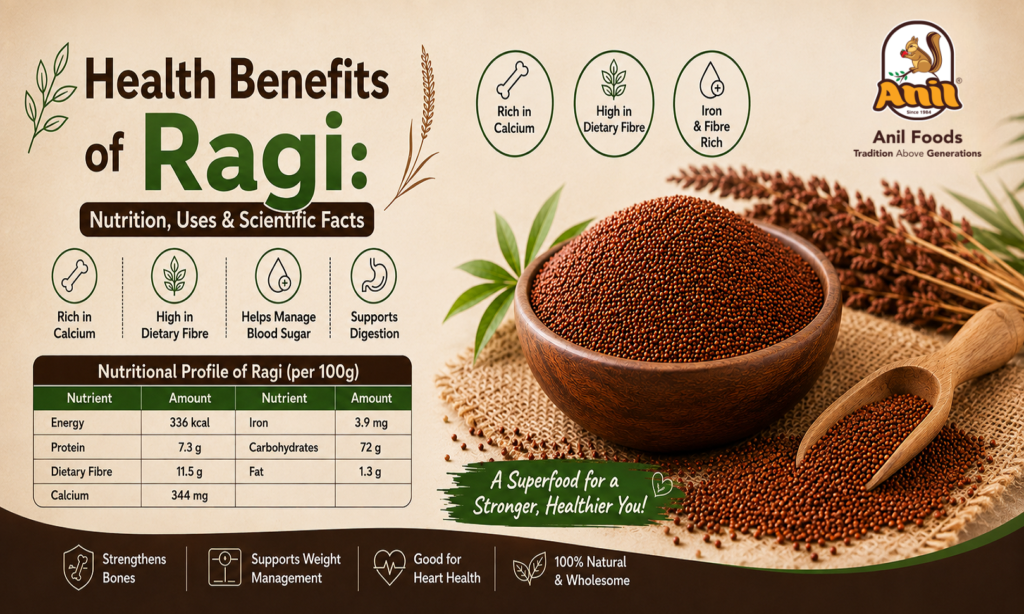
Nutritional Profile of Ragi (per 100g)
| Nutrient | Amount |
|---|---|
|
Energy |
336 kcal |
|
Protein |
7.3 g |
|
Dietary Fibre |
11.5 g |
|
Calcium |
344 mg |
|
Iron |
3.9 mg |
|
Carbohydrates |
72 g |
|
Fat |
1.3 g |
This combination of high fibre and calcium is what makes ragi stand out among traditional grains.
13 Science-Backed Health Benefits of Ragi
1. Supports Weight Loss
The high fibre content keeps you feeling full for longer, naturally curbing overeating and unnecessary snacking. If weight loss is your focus, ragi pairs well with other protein-rich foods too.
2. Strengthens Bones
Rich in calcium, ragi helps maintain bone density — useful for growing children as well as adults looking after long-term bone health.
3. Helps Manage Blood Sugar
Thanks to its low glycaemic index, ragi releases sugar slowly into the bloodstream, supporting steadier energy levels.
4. Improves Digestion
Its natural fibre content supports smooth digestion and helps prevent constipation. If you’re building a gut-friendly meal rotation, it’s also worth exploring other light, traditional dishes like idiyappam — our complete idiyappam guide covers both tradition and quick modern methods.
5. Boosts Iron Levels
Ragi’s iron content can help address mild anemia, especially when paired with vitamin C-rich foods for better absorption. Combining it with other iron and protein-rich foods, like soya chunks, can round out the benefit further.
6. Naturally Gluten-Free
Ragi is a safe, nutritious grain option for anyone with gluten sensitivity or celiac disease.
7. Has a Natural Cooling Effect
Traditionally consumed as porridge during warmer months, ragi is known for its cooling properties on the body.
8. Rich in Antioxidants
It contains polyphenols that support the body’s defences against everyday oxidative stress.
9. May Help Reduce Cholesterol
Some research suggests regular ragi consumption may support healthier cholesterol levels over time.
10. Provides Long-Lasting Energy
Its complex carbohydrates offer a steady energy release rather than quick spikes and crashes.
11. Supports Skin Health
Amino acids like methionine in ragi may aid in skin repair and maintaining a healthy complexion.
12. Promotes Relaxation and Better Sleep
Tryptophan present in ragi may help ease stress and support more restful sleep.
13. Beneficial for Growing Children
The calcium and iron content makes ragi a valuable addition to children’s diets, supporting bone development and immunity.
Possible Side Effects of Ragi
While generally safe, ragi isn’t without a few considerations:
- Bloating — Those unaccustomed to high-fibre foods may experience mild gas or bloating.
- Excess iron intake — Overconsumption, particularly alongside other iron-rich foods, could lead to iron excess.
- Kidney concerns — Ragi contains oxalates, which in large quantities may not suit people with existing kidney issues.
Precautions to Keep in Mind
- Introduce ragi gradually to let your digestive system adjust.
- Combine it with other grains and vegetables for balanced nutrition.
- Watch for any signs of discomfort or allergy and consult a doctor if needed.
- Pair with vitamin C-rich foods to boost iron absorption.
- Avoid large portions late at night, as it’s quite filling.
The ICMR-NIN Dietary Guidelines for Indians 2024 emphasise the importance of a varied and balanced diet rather than depending on one particular food for health. You can refer to the official ICMR-NIN Dietary Guidelines for evidence-based dietary guidance.
Is It Good to Eat Ragi at Night?
Yes — in moderation. Ragi’s fibre content makes it filling, which can help curb late-night hunger, and its tryptophan content may even support better sleep. That said, since it takes time to digest, it’s best eaten a few hours before bed rather than right before sleeping.
Simple Ways to Add Ragi to Your Diet
Ragi is easy to cook and even easier to enjoy. You don’t need to be a great cook to make tasty ragi food at home. Here are six simple ways to eat ragi, explained step by step in easy words — so easy that even a child helping out in the kitchen can follow along.
1. Ragi Porridge (Ragi Java)
Ragi porridge is soft, warm, and gentle on the tummy. It is one of the easiest ragi foods to make, and it’s a favourite for babies, kids, and adults.
How it’s made:
- Mix ragi flour with a little water to form a smooth, lump-free paste.
- Add this paste to boiling water (or milk), stirring all the time so no lumps form.
- Let it cook on low heat for a few minutes until it turns into a thick, smooth porridge.
- Add a little jaggery or honey for sweetness, or a pinch of salt and cumin if you like it savoury.
Enjoy it warm for breakfast or as a light meal before bedtime. It’s soft enough for young children and soothing enough for anyone who wants a comforting, homely meal.
2. Ragi Roti or Dosa
If you already make roti or dosa at home, swapping in ragi flour is an easy way to add its goodness to your family’s plate.
How it’s made:
- Mix ragi flour with a little wheat flour or rice flour, water, and a pinch of salt to make a soft dough (for roti) or a thin batter (for dosa).
- Add chopped onions, green chillies, or grated carrot for extra flavour and nutrition — great for making it kid-friendly.
- Roll it out and cook on a hot tawa (griddle) with a little oil until both sides turn golden brown.
- Serve hot with chutney, sambar, or curd.
To make this step even easier, you can use a ready-made Ragi Dosa Mix, which saves time while still giving you all the goodness of ragi. It’s a handy option for busy mornings or school lunchboxes.
3. Baked Snacks with Ragi
Ragi flour works beautifully in baking too, making snack time a little healthier without losing the fun.
How it’s made:
- Replace some or all of the regular flour in your muffin, cookie, or cracker recipe with ragi flour.
- Add mashed banana, grated carrot, or a few nuts to keep it moist and tasty.
- Bake as usual until golden and firm to the touch.
These make a great tiffin-box snack for children and a guilt-free treat for adults.
4. Ragi Malt Drink
A cool, energising drink that’s simple enough for children to help mix themselves (with a little supervision).
How it’s made:
- Mix a spoonful of ragi flour with a little water to make a smooth paste.
- Add this to a cup of boiling water or milk, stirring continuously to avoid lumps.
- Simmer for a few minutes until it thickens slightly, then let it cool.
- Sweeten with jaggery, or blend with a ripe banana and a pinch of cardamom for a fun, kid-friendly flavour.
Serve it chilled in summer as a refreshing drink, or warm in winter as a comforting one.
5. Ragi Laddoos
A sweet, bite-sized treat that’s perfect for festivals, lunchboxes, or a quick energy boost.
How it’s made:
- Dry-roast ragi flour on low heat until it turns fragrant (this takes just a few minutes — keep stirring so it doesn’t burn).
- Mix in melted jaggery, a spoon of ghee, and a handful of chopped nuts or dry fruits.
- While the mixture is still warm, shape it into small round balls using your hands.
- Let them cool and firm up before serving.
Children love rolling these into balls, making it a fun activity to do together in the kitchen.
6. Mixed Grain Meals
Ragi doesn’t have to work alone — it blends well with other traditional millets and grains for a well-rounded, filling meal.
How it’s made:
- Cook ragi flour or grains along with rice, or mix it with other millets like sorghum (cholam) or kodo millet (varagu) for extra variety.
- Add vegetables, dal, or curd to build a complete, balanced meal.
- Season simply with a bit of salt, cumin, and curry leaves for everyday comfort food.
Want to go deeper into ragi flour itself — its science, quality, and more recipe ideas? Check out our detailed guide: Benefits of Ragi Flour.
Conclusion
Ragi is a simple, versatile grain that offers genuine, well-rounded health benefits — from supporting weight management and bone strength to steadying blood sugar and energy levels. Adding it to your regular diet, even in small amounts, can make a meaningful difference over time.
Of course, food is only one part of the health equation. Regular health check-ups help you understand what your body truly needs. Trusted diagnostic providers make it convenient to track your health markers without disrupting your routine.
Looking to explore more traditional grains and healthy recipes? Browse the full Anil Foods blog for guides on millets, protein-rich Indian recipes, and everyday nutrition.
Frequently Asked Questions (FAQs)
Is ragi gluten-free?
Yes, ragi is completely gluten-free, making it a safe and nutritious option for those with gluten intolerance or celiac disease.
Can ragi help control blood sugar levels?
Yes. Its low glycaemic index means sugar is released slowly into the bloodstream, supporting more stable blood sugar and energy.
How can I include ragi in my diet?
Ragi works well as porridge, rotis, dosas, malt drinks, or baked snacks — versatile enough for daily meals. For a quick start, try a ready-made Ragi Dosa Mix.
What are the benefits of ragi for women?
Ragi supports bone health through calcium, helps manage iron levels to prevent anaemia, and can aid weight management, including during pregnancy or menopause.
What are the benefits of sprouted ragi?
Sprouting improves nutrient absorption, enhances calcium and iron bioavailability, supports digestion, and increases antioxidant content.
Does ragi cause constipation?
Generally no — its fibre content supports digestion. However, excessive intake without adequate water may cause constipation.
Is ragi a heating or cooling food?
Ragi has a natural cooling effect and is often consumed in warmer months for this reason.
When should ragi be avoided?
Those with kidney stones or chronic kidney disease should avoid or limit ragi due to its oxalate content, and should consult a doctor before adding it to their diet.
Table of Contents