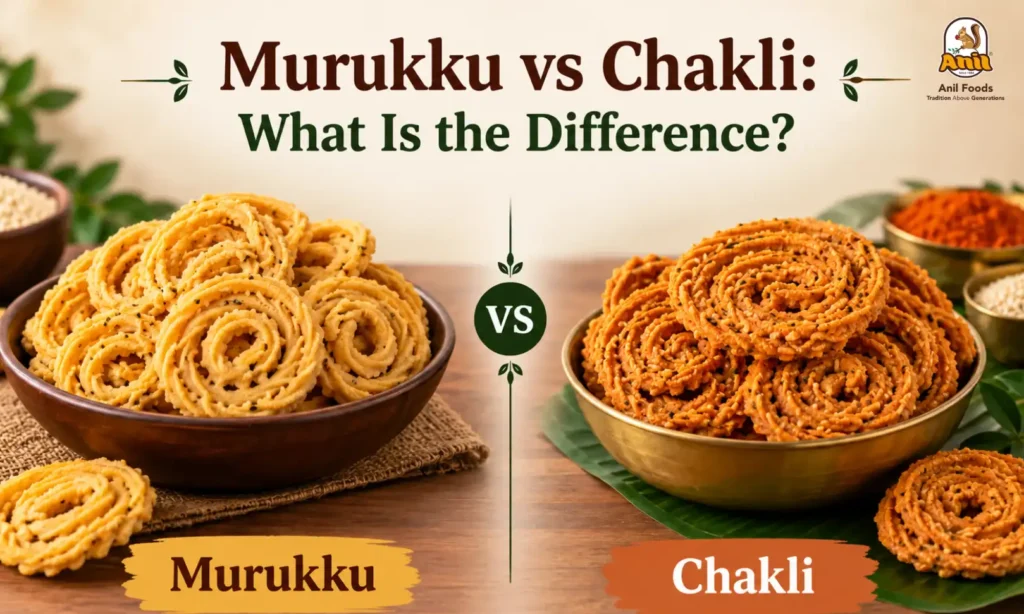
Murukku and chakli are popular Indian snacks known for their crispy texture and spiral shapes. Both are enjoyed with tea or coffee and are commonly prepared during festivals and family celebrations. Since they look similar, many people wonder whether murukku and chakli are the same.
The main differences usually lie in their regional traditions, flour combinations, seasonings and preparation methods. Murukku is strongly associated with South Indian cuisine, particularly Tamil Nadu, while chakli is popular in Maharashtra and other parts of western India. However, recipes and names can overlap across regions.
In this guide, we will explore the difference between murukku and chakli, their popular varieties, ingredients, taste and preparation methods.
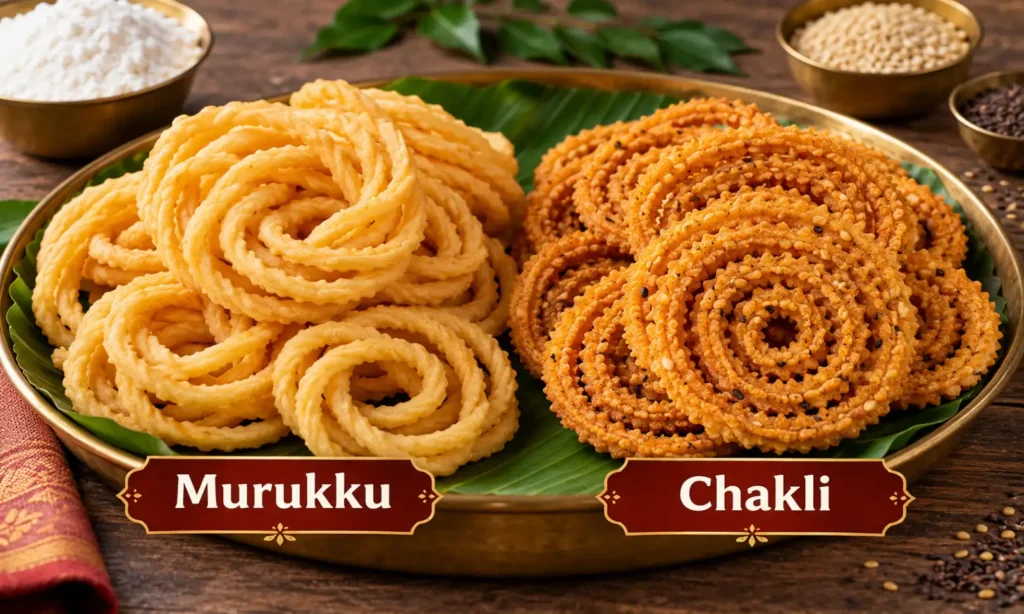
What Is Murukku?
Murukku is a traditional savoury snack widely enjoyed in Tamil Nadu and other South Indian states. Its name comes from the Tamil word associated with twisting, referring to its characteristic coiled shape.
Traditional murukku is commonly made using rice flour and urad dal flour. Depending on the recipe, ingredients such as sesame seeds, cumin seeds, salt and asafoetida are added for flavour. The dough is pressed through a special mould to create spirals or other shapes before being deep-fried until crisp.
Murukku is enjoyed during Diwali and other celebrations, but it is also a familiar everyday tea-time snack. Its flavour can range from mild and delicate to buttery or spicy, depending on the variety.
For more background on this traditional snack, read our complete Murukku Guide.
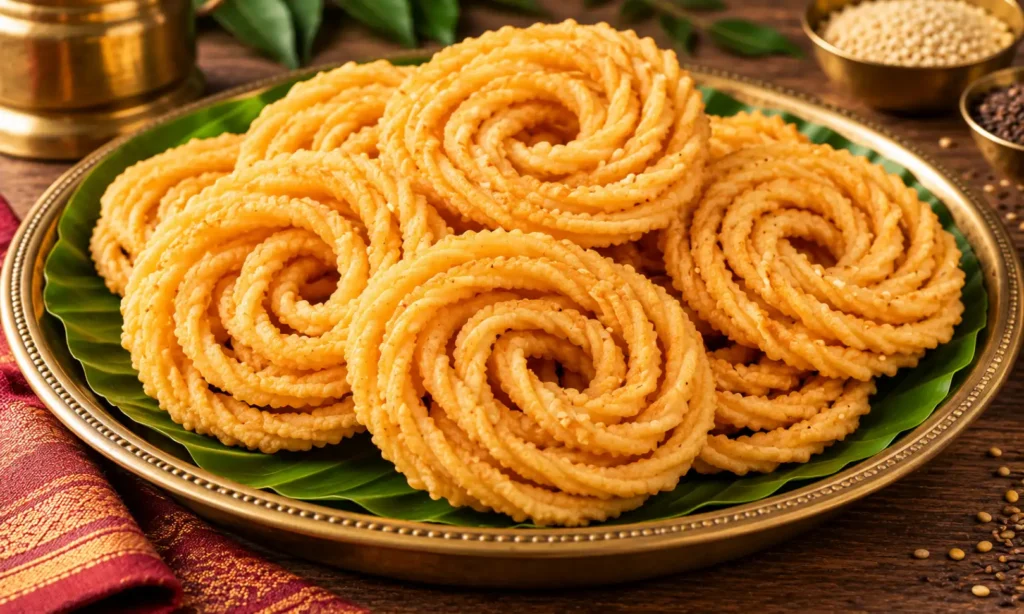
Popular Types of Murukku
Murukku comes in several varieties, each offering a different shape, flavour and texture.
- Thenkuzhal Murukku: A light, crisp variety commonly made with rice flour and urad dal flour. It generally has a mild flavour and delicate crunch.
- Butter Murukku: Butter is added to the dough to create a tender, delicate texture.
- Mullu Murukku: Recognised by its ridged, thorn-like appearance, this variety has a distinctive shape and satisfying crunch.
- Kai Murukku: Traditionally shaped by hand into intricate coils. It takes practice to achieve its characteristic appearance.
- Garlic Murukku: A flavourful variation that uses garlic for a stronger savoury taste.
The ingredients and texture depend on the recipe used.
For a closer look at one popular variety, read Anil Foods’ Murukku Varieties Guide.
What Is Chakli?
Chakli is a crispy, spiral-shaped Indian snack particularly popular in Maharashtra and other western Indian regions. It is a familiar part of Diwali snack preparations and is often served alongside other savoury treats.
Chakli recipes vary considerably. Some use rice flour and gram flour, also known as besan, while others use bhajani flour, a traditional roasted flour blend. Spices, sesame seeds and cumin may be added according to regional preferences.
The dough is pressed through a chakli mould to create ridged spirals. These are then fried until crisp. Depending on the flour blend and seasoning, chakli can have a mild, nutty or spicy flavour.
Although chakli resembles murukku, the ingredients and traditional preparation styles can give it a different taste and texture.
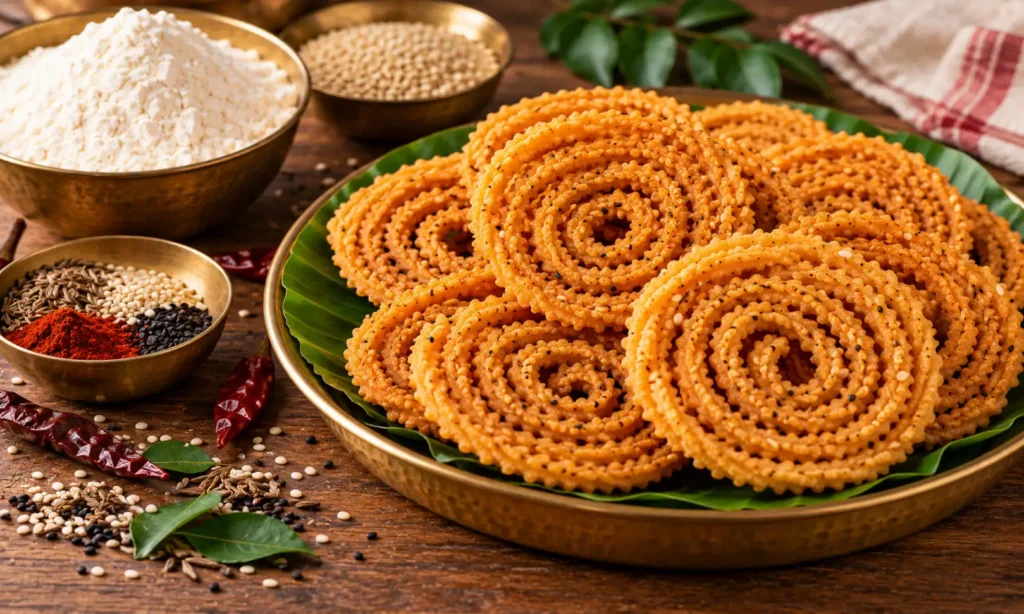
Popular Types of Chakli
Different flour combinations and seasonings give chakli its variety.
- Rice Chakli: Made mainly with rice flour, this version has a familiar crisp texture and can be mildly seasoned.
- Besan Chakli: Prepared with gram flour, it has a distinctive nutty flavour.
- Bhajani Chakli: A traditional Maharashtrian variety made using bhajani flour, generally prepared from roasted grains and pulses.
- Masala Chakli: Seasoned with spices for a stronger savoury flavour.
- Multigrain Chakli: Made using a combination of flours, which may include rice, wheat or millet, depending on the recipe.
Not every chakli recipe uses the same ingredients. The regional style and preferred flour blend influence the final result.
For an alternative preparation method, check the Eat Right India recipe guide.
Murukku vs Chakli: Key Differences
Murukku and chakli share several characteristics, but their traditional ingredients, regional associations and flavour profiles can differ.
| Feature | Murukku | Chakli |
|---|---|---|
|
Regional association
|
South India, especially Tamil Nadu
|
Maharashtra and western India
|
|
Common flour combinations
|
Rice flour and urad dal flour
|
Rice flour, besan or bhajani flour
|
|
Shape
|
Often circular coils; shapes vary by type
|
Commonly ridged spirals
|
|
Flavour
|
Often mild, savoury or buttery
|
Mild, nutty or more heavily spiced
|
|
Texture
|
Can range from delicate to firmly crunchy
|
Usually crisp; texture varies by flour blend
|
|
Popular varieties
|
Thenkuzhal, butter, mullu and kai murukku
|
Rice, besan, bhajani and masala chakli
|
|
Occasions
|
Everyday snacking and festivals
|
Everyday snacking and festivals, particularly Diwali
|
These are general distinctions rather than strict rules. Some murukku varieties are spicy, while some chakli recipes use mainly rice flour. Ingredients and preparation methods can overlap.
Difference in Ingredients, Taste and Texture
The easiest way to understand murukku vs chakli is to look at the ingredients used and how they influence the finished snack.
1. Ingredients
Traditional murukku often combines rice flour with urad dal flour. Sesame seeds, cumin and asafoetida may be added for seasoning.
Chakli may use rice flour and gram flour or a traditional bhajani flour blend. Seasoning varies, with some recipes including chilli powder, cumin or other spices.
These are common patterns, not fixed rules. Always check the individual recipe to understand its ingredients.
2. Taste
Murukku can have a mild, savoury flavour that allows the taste of the flours and seasonings to stand out. Butter murukku, for example, tastes different from a spiced garlic variety.
Chakli can taste nutty when made with gram flour or a roasted flour blend. Spiced versions may have a stronger flavour, although simple rice chakli can be mild.
3. Texture
The texture of both snacks depends on the flour combination, moisture level, shaping method and frying process.
Thenkuzhal murukku is often light and delicate, while mullu murukku has a more pronounced ridged texture. Chakli may have a firm crunch, but its texture changes according to the flour blend and recipe.
Neither snack has just one standard texture. The particular variety matters more than the name alone.
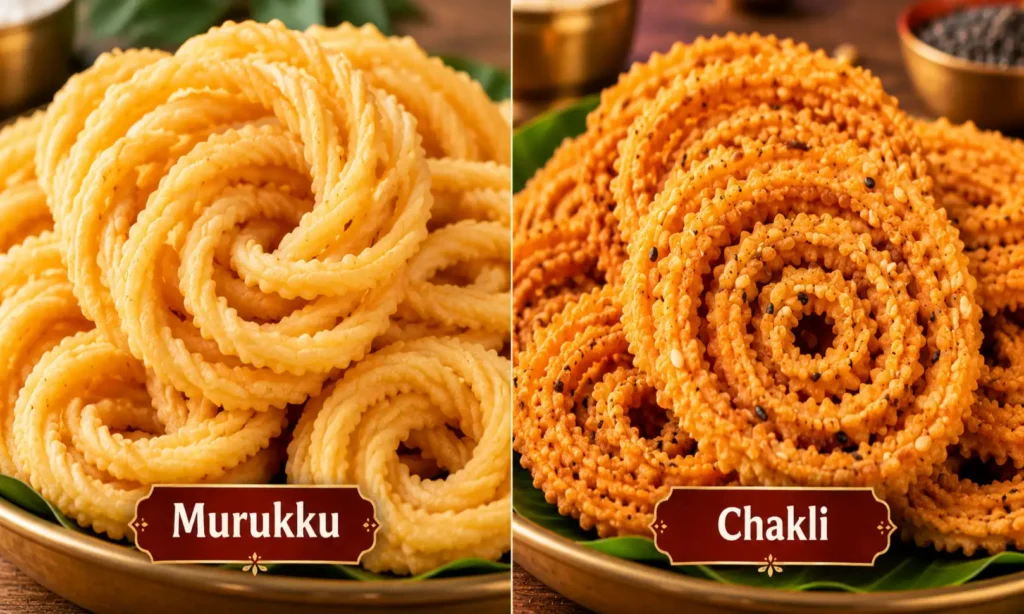
How Are Murukku and Chakli Prepared?
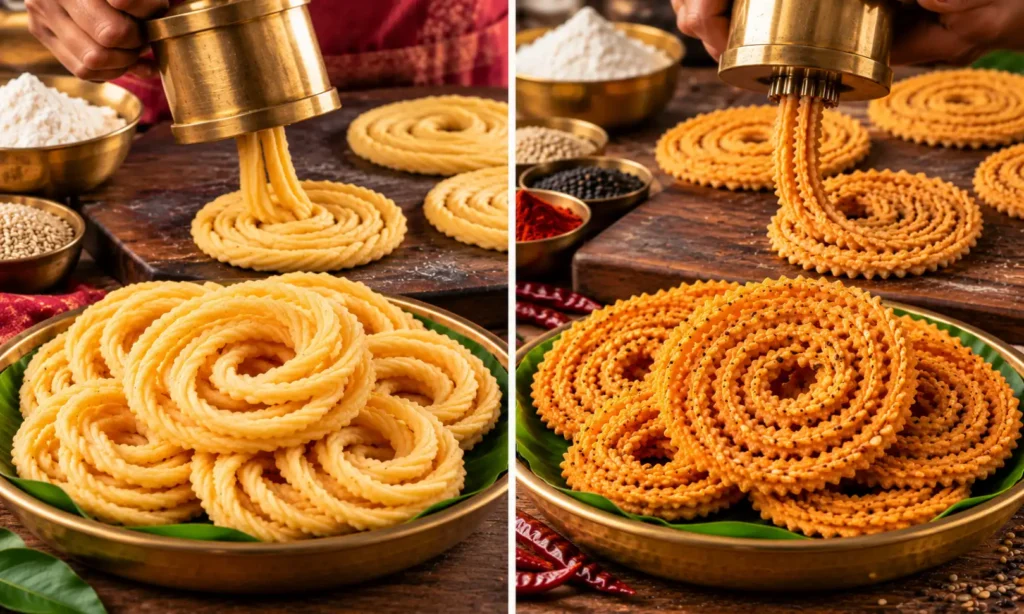
Both snacks generally involve mixing flour and seasonings, forming a dough, shaping it with a press and deep-frying it. However, the flour mixture and preparation details can differ.
How Is Murukku Prepared?
Rice flour and urad dal flour are commonly combined with salt, seasonings and enough water to make a workable dough. The dough is placed inside a murukku press and shaped into coils. The pieces are then fried until crisp and allowed to cool.
The precise flour ratio and dough consistency depend on the variety being prepared.
How Is Chakli Prepared?
Chakli dough is made using a suitable flour blend, such as rice flour with besan or bhajani flour. Seasonings are mixed in, and water is added to form a dough that can pass through a chakli mould.
The dough is shaped into ridged spirals and fried until crisp. The flour blend and seasoning determine much of its final flavour and texture.
Are Murukku and Chakli the Same?
Murukku and chakli are closely related in appearance and preparation, but they are not always identical. Both are crispy, savoury snacks shaped using a press, and some recipes share similar ingredients.
The names are also used differently across regions. In some places, people use the terms interchangeably, while in others they refer to distinct local recipes.
The best way to distinguish them is to consider the flour blend, seasoning, shape and regional preparation style rather than relying on the name alone.
Can You Use Murukku Flour to Make Chakli?
Murukku flour may be suitable for some chakli-style preparations, depending on its ingredients and the recipe. However, different chakli varieties use different flour combinations, so the results may vary.
Before substituting one flour blend for another, check the product instructions and choose a recipe that matches the ingredients. If you are preparing traditional murukku, explore Anil Murukku Flour and follow the preparation instructions provided with the product.
Conclusion
Murukku and chakli are two much-loved Indian snacks that share a crispy texture and familiar spiral shape. Their main differences come from regional traditions, flour combinations, seasonings and preparation methods.
Murukku is strongly associated with South Indian cuisine and commonly uses rice flour with urad dal flour. Chakli is particularly popular in Maharashtra and may use rice flour, besan or bhajani flour. However, recipes overlap, and no single ingredient or shape distinguishes every variety.
Whether you prefer the delicate crunch of thenkuzhal murukku or the distinctive flavour of bhajani chakli, both snacks have a special place in Indian food traditions.
For preparing traditional murukku at home, explore Anil Murukku Flour and choose a recipe suited to the product.
Frequently Asked Questions
1. Is murukku the same as chakli?
Not always. Both are crispy, spiral-shaped snacks, but their ingredients, regional traditions and recipes can differ. In some regions, the names are used interchangeably.
2. Which flour is used for murukku?
Traditional murukku is commonly made using rice flour and urad dal flour. Sesame seeds, cumin and asafoetida may be added according to the recipe.
3. Which flour is used for chakli?
Chakli can be prepared using rice flour, gram flour or bhajani flour. The combination depends on the regional variety and the desired flavour and texture.
4. Which is crispier, murukku or chakli?
Both can be very crispy. The result depends on the recipe, flour mixture, dough consistency and frying method rather than the snack’s name alone.
5. Are murukku and chakli eaten during Diwali?
Yes. Both snacks are enjoyed during Diwali and other celebrations. Their popularity varies by region, and they are also commonly served as everyday tea-time snacks.
6. Can murukku and chakli be made without spices?
Yes. Many recipes use simple seasonings such as salt and sesame seeds. Other versions include additional spices for a stronger flavour.
Table of Contents