
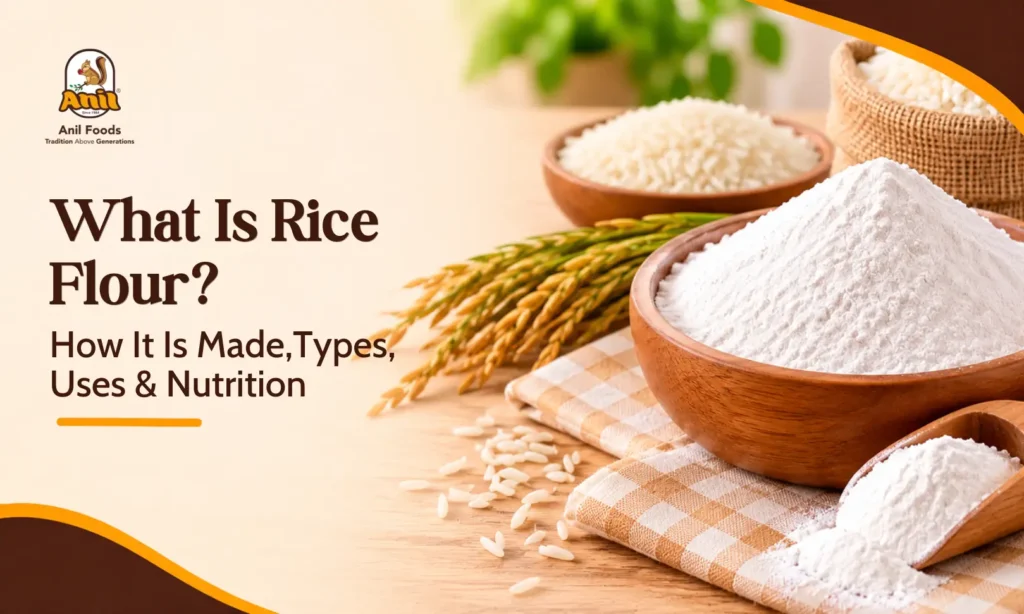
Have you ever thought about how soft the idiyappam we eat feels like or how the murukku gets its crispy texture? The common ingredient used to make these dishes is rice flour. It is widely used in Indian kitchens to prepare breakfast dishes, snacks, sweets and many more delicacies. Rice flour is made from rice, but it can be used in many different ways in cooking.
So, we will learn from this blog in detail about what is rice flour and how it is converted from rice grains to a fine powder? Rice flour is made by grinding rice grains into a fine consistency and is valued for its mild taste and adaptability. Let’s look at how it is made, the different types available and how it is used in cooking.
What Is Rice Flour?
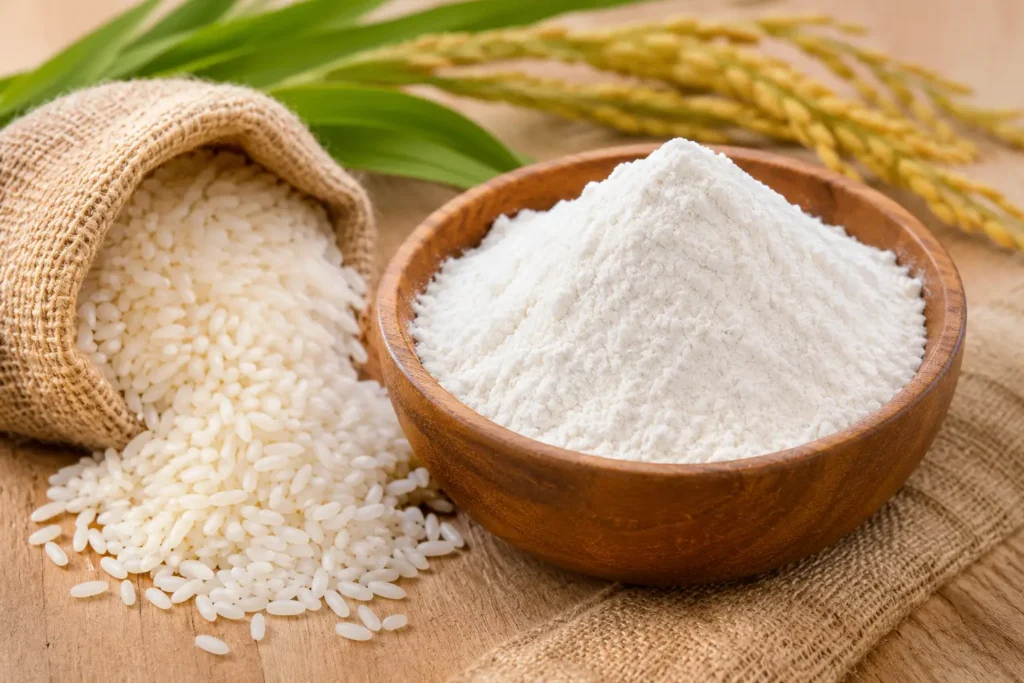
Rice flour has a fine powder consistency which is made by grinding rice grains. The texture of the rice flour may vary depending on its colour, taste, etc. It has a mild flavour, which makes it easy to use in different recipes without changing the overall taste of a dish.
Rice flour does not contain gluten, unlike wheat flour. This makes it a useful option for people who follow a gluten-free diet. It is commonly used to prepare Indian dishes such as idiyappam, puttu, murukku and kozhukattai. It is also used in baking, fried food coatings and as a thickening agent in soups and gravies.
How Is Rice Flour Made?
Rice flour is made by processing rice grains into a fine powder. The process is quite simple, although the exact method may vary depending on the type of rice and the equipment used.
The main steps involved are:
1. Cleaning the Rice
Rice grains are first cleaned to remove dust, dirt, stones and other unwanted particles. This ensures that clean grains are used for further processing.
2. Soaking the Rice (If Required)
In some methods, rice is soaked in water for a specific period to soften the grains before grinding. However, soaking is not necessary for every type of rice flour production.
3. Drying the Rice
After soaking, the rice is drained and dried to remove excess moisture. In dry-milling methods, cleaned rice is prepared for grinding without soaking.
4. Grinding the Rice
The dried rice grains are ground using milling machines until they turn into a fine powder. The grinding process helps determine how fine or coarse the flour will be.
5. Sieving and Packaging
Finally, the flour is sieved to remove larger particles and get a uniform textured powder. It is then packed properly to protect it from moisture and maintain its quality.
What Are the Different Types of Rice Flour?
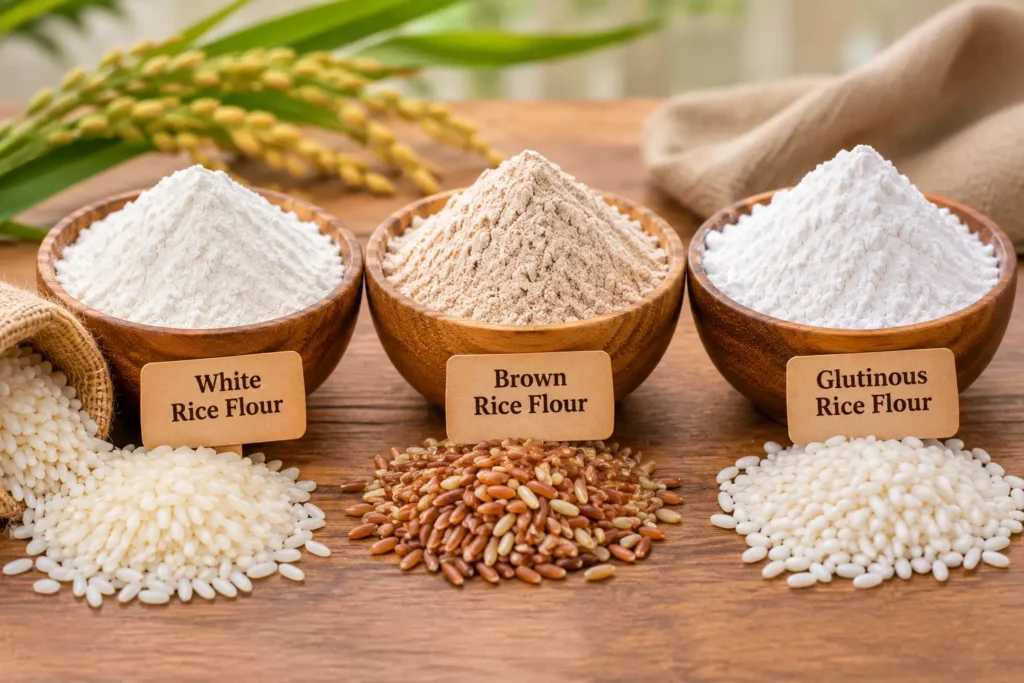
The rice flour has a variety of ranges to list depending on the type of rice used to make it. Each variety has its different consistencies which is best suitable for different food recipes.
Here are three commonly used types:
| Type of Rice Flour | Made From | Common Uses |
|---|---|---|
|
White Rice Flour
|
Polished white rice
|
Idiyappam, murukku, snacks and baking
|
|
Brown Rice Flour |
Whole-grain brown rice
|
Pancakes, flatbreads and baking
|
|
Glutinous Rice Flour
|
Sticky rice
|
Rice cakes, dumplings and desserts
|
So, with each variety of flour we get to make a new recipe, rice flour useful for a wide range of dishes. One thing that plays an important role is choosing the right type of flour which can help bring better results while cooking.
What Are the Different Uses of Rice Flour?
Rice flour is being used in different types of cooking ranging from traditional Indian recipes to the daily evening snacks everyone has.
Common Ways to Use Rice Flour
- Traditional Indian dishes: Can be used to prepare idiyappam, puttu, kozhukattai and other regional dishes.
- Crispy snacks: Added to murukku, pakoras and fried snack recipes offering a crunchy texture.
- Baking: Used as an ingredient to bake cookies, cakes and pancakes, especially in gluten-free recipes.
- Thickening soups and gravies: Helps make soups, sauces and gravies thicker without adding a strong flavour.
- Sweets and desserts: Used to prepare rice cakes, dumplings and traditional sweets.
How Does Rice Flour Affect Food Texture?
The way rice flour behaves in a recipe depends on how it is prepared and what other ingredients are used.
It can help:
- Give fried snacks a crisp texture
- Create a soft texture in some traditional rice-based dishes
- Provide structure in some baked recipes
- Thicken certain soups, sauces and gravies
- Improve the texture of some coatings and batters
Since rice flour does not contain gluten, it does not behave exactly like wheat flour in recipes that depend on gluten for elasticity and structure.
Rice Flour vs Wheat Flour – What's the Difference?
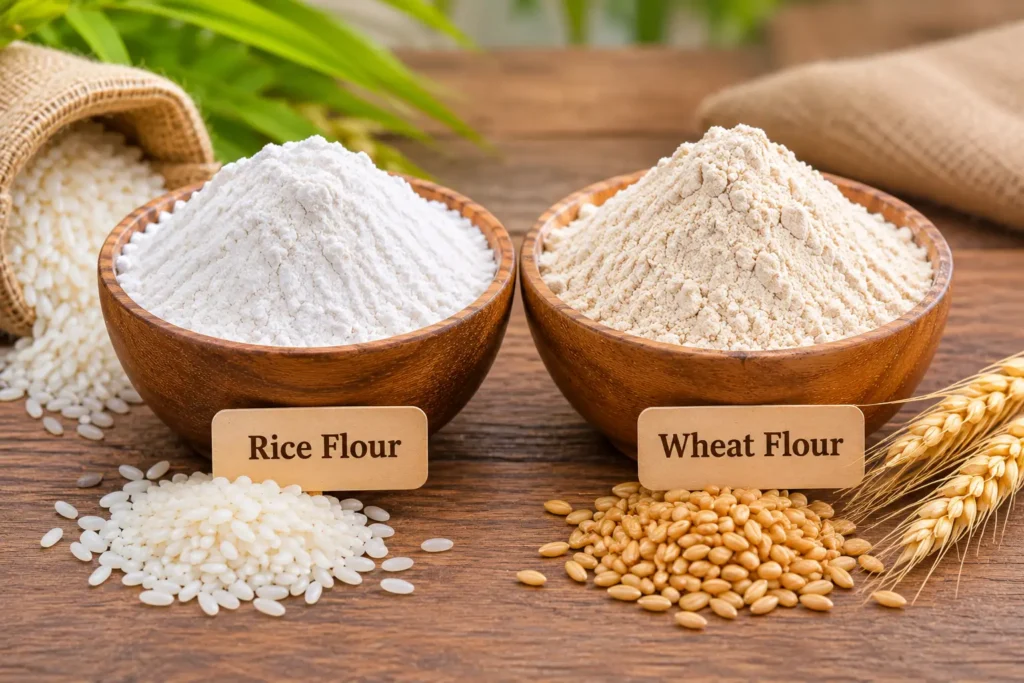
Think about making idiyappam and chapati. Both use flour as their main ingredient, but the flour used for each is different. Rice flour is commonly used in traditional dishes and crispy snacks, whole wheat flour is a regular choice for making chapatis, breads and other baked foods. Let’s look at how these two flours differ.
| Feature | Rice Flour | Wheat Flour |
|---|---|---|
|
Made from
|
Rice grains
|
Wheat grains
|
|
Gluten content
|
Naturally gluten-free
|
Contains gluten
|
|
Texture
|
Fine and sometimes slightly grainy
|
Usually soft and powdery
|
|
Common uses
|
Idiyappam, murukku and snacks
|
Chapati, bread and cakes
|
|
Baking
|
Often combined with other flours
|
Commonly used in regular baking
|
Both flours have their own uses in cooking, so one cannot always replace the other. The right choice depends on the recipe and the texture you want to achieve.
What Is the Nutritional Value of Rice Flour?
The nutritional value of rice flour can vary from one brand to another. It may also differ depending on the type of rice used and the processing method. Therefore, it is best to check the nutrition information provided on the product packaging.
Anil Rice Flour Nutrition
According to the nutrition information provided on the Anil Rice Flour pack, one serving is 30g (1/4 cup). The pack contains approximately 17 servings.
| Nutrient | Amount per 30g serving |
|---|---|
|
Energy
|
109 kcal
|
|
Total Fat
|
0g
|
|
Saturated Fat
|
0g
|
|
Trans Fat
|
0g
|
|
Cholesterol
|
0mg
|
|
Sodium
|
5mg
|
|
Total Carbohydrate
|
24g
|
|
Dietary Fibre
|
1g
|
|
Total Sugars
|
0g
|
|
Added Sugars
|
0g
|
|
Protein
|
3g
|
|
Vitamin D
|
0mcg
|
|
Calcium
|
6mg
|
|
Iron
|
1mg
|
The values above are based on the nutrition information provided on the Anil Rice Flour product pack. Nutritional values may vary between brands and products. Please check the product packaging for the latest information.
Is Rice Flour Gluten-Free?
Plain rice flour is naturally gluten-free because it is made from rice.
However, if you are avoiding gluten because of a medical condition or strict dietary requirement, check the product label and manufacturing information to make sure the product is suitable for your needs.
Choose the Right Flour for Your Recipe
Anil Foods offers different flour products for everyday cooking and traditional recipes. These include:
- Rice Flour: Suitable for traditional rice-based dishes and everyday cooking.
- String Hopper Flour: For preparing soft idiyappam.
- Murukku Flour: For making crispy murukku.
- Kozhukattai Flour: For preparing traditional kozhukattai.
- Ragi Flour: Made from finger millet and used in a variety of recipes.
- Kambu Flour: Made from pearl millet.
- Whole Wheat Flour: Suitable for everyday recipes such as chapati.
- Maida: Refined wheat flour used in various cooking and baking recipes.
Choose the flour based on the dish you want to prepare and the texture you want to achieve.
How to Store Rice Flour Properly?
Rice flour needs to be stored properly to maintain its freshness and quality. Since it can absorb moisture easily, keeping it in the right conditions is important.
Here are a few simple storage tips:
- Use an airtight container: Store rice flour in a clean, dry and airtight container to protect it from moisture.
- Keep it in a cool place: Store it away from direct sunlight and heat.
- Avoid using wet spoons: Always use a clean, dry spoon when taking flour from the container.
- Check before use: Look for unusual smells, changes in texture or signs of insects before using it.
- Follow packaging instructions: Check the storage recommendations and best-before date mentioned on the product pack.
Proper food storage is important for maintaining the quality and safety of ingredients. You can also refer to the FSSAI food safety regulations for more information.
More Helpful Articles from Anil Foods
Frequently Asked Questions
1. Is rice flour good or bad for health?
Rice flour can be included as part of a balanced diet. It mainly provides carbohydrates and energy. Brown rice flour generally contains more fibre than white rice flour. As with any food, the amount and overall diet are important.
2. Can I eat rice flour without cooking it?
It is better not to eat raw rice flour. Like other raw flours, it may contain harmful microorganisms. Cook or bake rice flour properly before eating.
3. What is Indian rice flour?
Indian rice flour is made by grinding rice into a fine powder. It is commonly used to prepare dishes such as idiyappam, puttu, murukku and kozhukattai. The texture can vary depending on the type of rice and how it is processed.
4. What is the best substitute for rice flour?
The best substitute depends on the recipe. Cornflour, potato starch, tapioca flour or wheat flour may work in some recipes, but they can change the taste and texture. So, the best substitute depends on what you are preparing.
5. Is rice flour 100% rice?
Plain rice flour is generally made by grinding rice into a fine powder. However, some packaged flour mixes may contain other ingredients. Always check the product label to know what the product contains.
6. Can I replace wheat flour with rice flour?
Rice flour can replace wheat flour in some recipes, but it cannot always be used in the same quantity. Since rice flour does not contain gluten, the texture of the final dish may be different. Some recipes work better when rice flour is combined with other flours.
7. Is rice flour the same as maida?
No. Rice flour and maida are different. Rice flour is made from rice, while maida is refined wheat flour. They have different properties and are used in different recipes.
8. Can rice flour be used for baking?
Yes. Rice flour can be used in cookies, cakes, pancakes and other baked foods. Depending on the recipe, it may be used alone or combined with other flours to get the desired texture.
9. Is rice flour good for making crispy snacks?
Yes. Rice flour is commonly used in snacks such as murukku and other fried foods because it can help create a crisp texture.
Table of Contents