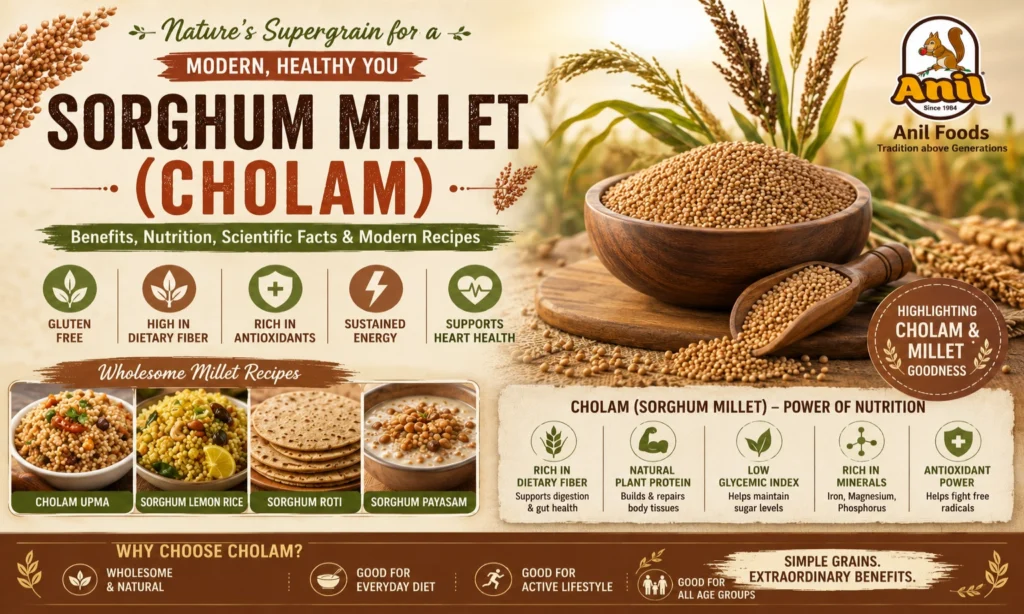
The Resilience of the Great Millet: A Legacy of the Drylands
Walk through the semi-arid fields of South India, and you will encounter a crop that stands tall against the harshest sun. This is the sorghum plant, known locally as Cholam. For generations, it has been the silent guardian of rural health, a grain that doesn’t just grow; it thrives where others fail. While the world spent decades prioritizing refined wheat and polished rice, the sorghum seed remained a gold standard for those who understood the value of slow-burning energy and deep nutritional density.
In 2026, the global shift toward “Climate-Smart Crops” has brought sorghum (Cholam) into the elite spotlight. At The Anil Group, our journey with this ancient grain began in 1984, driven by a commitment to bring the resilience of the drylands into the modern kitchen. We realized that for sorghum millet to become a staple once more, it needed to be as versatile as it is healthy. Whether you are analyzing the sorghum scientific name (Sorghum bicolor) for academic rigor or simply seeking a gluten-free breakfast that powers you through a high-pressure workday, Cholam is the bridge between our heritage and a high-performance future.
Botanical Rigor: Understanding the Sorghum Plant and Seed
To truly appreciate sorghum benefits, one must understand the anatomy of the grain. The sorghum scientific name, Sorghum bicolor, hints at its diverse nature. As a member of the Poaceae family, the sorghum plant is a structural marvel, featuring deep root systems that extract moisture and minerals from soil that would leave other crops parched.
The sorghum seed itself is a multi-layered treasure. It consists of the pericarp (outer layer), the endosperm (storage tissue), and the germ (the nutrient-rich core). Unlike refined wheat, where the bran and germ are often stripped away, The Anil Group utilizes specialized milling techniques to ensure these layers remain largely intact in our Anil Sorghum Vermicelli. This preservation is why the fiber content remains high, providing the “Elite Standard” of nutrition that modern health enthusiasts demand.
The Technical Core: Sorghum Nutritional Value per 100g
Why is sorghum (Cholam) currently witnessing a massive 49,500 monthly search surge? The answer lies in its unique biochemical makeup. Unlike many modern cereals, the sorghum plant produces a seed that is naturally gluten-free and packed with phenolic compounds that act as powerful antioxidants.
| Nutrient (per 100g) | Sorghum Millet (Cholam) | White Rice (Refined) | Metabolic Advantage |
|---|---|---|---|
|
Dietary Fiber |
10.2 g |
0.4 g |
Optimizes digestive transit and satiety |
|
Protein |
11.3 g |
6.8 g |
Essential for muscle synthesis and repair |
|
Iron |
4.4 mg |
0.7 mg |
Supports oxygen transport and energy |
|
Antioxidants |
High (Polyphenols) |
Trace
|
Cellular protection and anti-inflammatory |
A Deep Dive into Sorghum Benefits
- Metabolic Management and Glycemic Control: The high concentration of fiber and complex tannins in sorghum millet slows down the digestion of starch. This creates a “slow-release” glucose mechanism, making it an excellent choice for glucose regulation. This is why we advocate for millets as a primary dietary choice for those managing Type-2 diabetes or insulin resistance.
- Heart Health and Lipid Profile: Sorghum is exceptionally rich in phytosterols. These plant compounds compete with cholesterol for absorption in the gut, effectively helping in managing overall cholesterol levels. By incorporating millet vermicelli into your daily routine, you are supporting cardiovascular longevity through natural, whole-food nutrition.
- The Gluten-Free Authority: For those navigating celiac disease or non-celiac gluten sensitivity, the sorghum seed is a safe, nutrient-dense alternative. It provides the texture and versatility of wheat without the inflammatory response triggered by gluten proteins.
- Digestive Wellness: The insoluble fiber in types of sorghum acts as a prebiotic, feeding the beneficial bacteria in your gut. A healthy microbiome is the foundation of a strong immune system, proving that sorghum benefits extend far beyond the digestive tract.
Innovation in the Kitchen: Modern Sorghum Recipes
Transitioning to types of sorghum based diets doesn’t mean leaving behind the comfort and flavors of traditional South Indian cuisine. These one-pot recipes utilize the Anil Group range to ensure you get professional-grade results in a fraction of the usual cooking time.
1. Cholam (Sorghum) Black Pepper Upma
A savory, warming breakfast that utilizes the digestive benefits of black pepper and the high fiber of Cholam.
- The Product: Anil Sorghum Vermicelli.
- The Recipe: Sauté mustard seeds, green chilies, and curry leaves in a wide pan. Add the vermicelli and the required amount of water. Because of our precision processing, the vermicelli remains non-sticky and maintains a nutty, satisfying bite. This is a perfect example of culinary inspiration for healthy lunches that won’t leave you feeling sluggish.
2. Instant Cholam Herb Paniyaram
A modern take on a classic snack, perfect for high-protein evening tiffin.
- The Product: Anil Cholam Dosa Mix.
- The Recipe: Whisk the mix with water to the desired consistency. Add finely chopped onions, crushed ginger, and fresh coriander. Pour into a seasoned paniyaram pan and cook until the edges are golden and crispy.
3. The Probiotic Cholam Koozh (Porridge)
A traditional cooling drink that remains a staple for South Indian wellness, especially during the humid summer months.
- The Product: Anil Flour Category.
- The Recipe: Cook sorghum flour with water into a thick, glossy paste. Once it has cooled completely, whisk it with fresh, sour buttermilk and a pinch of rock salt. Much like the probiotic Kambu koozh, this drink is a powerhouse for gut health.
The Anil Sourcing Standard: Why Purity Matters
When you search for sorghum benefits, you are looking for more than just a label; you are looking for a promise of quality. Since 1984, The Anil Group has operated with the understanding that the “Elite Standard” of nutrition starts at the source. We work closely with farmers who understand the lifecycle of the sorghum plant, ensuring that the sorghum seed is harvested at the peak of its nutritional potency.
Our milling facility is designed to process sorghum millet with minimal heat generation, which prevents the delicate oils and vitamins in the grain from oxidizing. This attention to detail is what separates a generic store-brand flour from the Anil Flour range. We don’t just provide food; we provide the technical foundation for a healthier South India.
Frequently Asked Questions (FAQs)
1. What is the sorghum scientific name?
The sorghum scientific name is Sorghum bicolor. It belongs to the Poaceae family and is known for its extreme drought resistance.
2. Is sorghum millet gluten-free?
Yes, all types of sorghum are naturally 100% gluten-free, making it a primary choice for gluten-sensitive diets.
3. What are the main sorghum benefits for weight loss?
The high fiber content in the sorghum seed promotes satiety, reducing overall caloric intake by keeping you full for longer periods.
4. How does a sorghum plant differ from corn?
While they look similar, the sorghum plant is more drought-tolerant and the seeds are generally higher in antioxidants and fiber than most corn varieties. Check our guide on corn vs. millet benefits for more.
5. Can I use sorghum flour for daily cooking?
Absolutely. You can find high-quality options in the Anil Flour Category for making rotis, dosas, or porridges.
6. Is sorghum good for diabetes?
Yes, sorghum millet has a lower glycemic index compared to refined grains, helping to maintain stable blood sugar levels.
7. What is the best way to cook sorghum vermicelli?
The best way is to steam it for 3-5 minutes or cook it directly in a seasoned broth for a one-pot meal like our Anil Sorghum Vermicelli.
8. Are there different types of sorghum?
Yes, there are several types of sorghum, including grain sorghum (for food), sweet sorghum (for syrups), and fodder sorghum (for livestock).
9. Where can I buy authentic Cholam products?
You can purchase the full range directly from the Anil Shop.
10. Why choose Anil Sorghum products?
Since 1984, we have used specialized milling techniques to ensure the nutritional integrity of the grain remains intact, providing you with the “Elite Standard” of millet nutrition.
Table of Contents