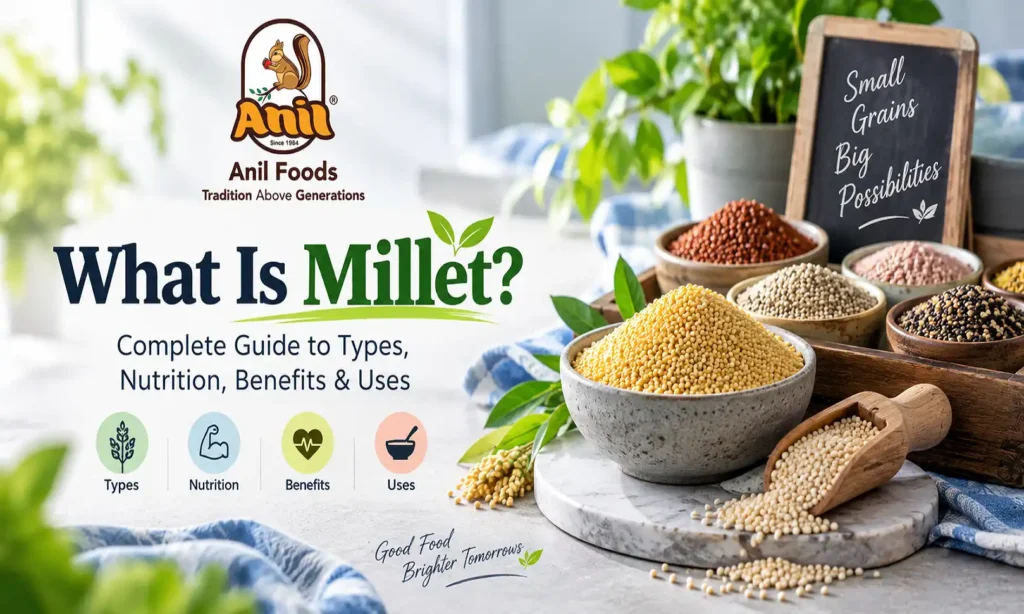
Millet is a group of small-seeded cereal grains belonging to the grass family. Unlike a single grain such as rice or wheat, the term “millet” refers to several different grains, including ragi, pearl millet, foxtail millet, little millet, kodo millet and barnyard millet.
It is a traditional grain that has been enjoyed in Indian households for generations. These small, hardy grains are known for their versatility, nutritional value, and ability to grow in different climatic conditions.
In recent years, millet has become increasingly popular among people looking for nutritious alternatives to commonly consumed grains. From breakfast dishes and rotis to snacks and desserts, millets can be used in many familiar recipes.
But what exactly is millet? What are the different types of millets, what nutrients do they contain, and how can you include them in your everyday diet?
This complete guide explains everything you need to know about millet in simple terms.
What Is Millet?
Millet is a group of cereal grains with small seeds that come from several species of grass. They have been cultivated and eaten for thousands of years, especially in parts of Asia and Africa.
Millets are naturally gluten free and can be found in a variety of types, each with its own color, texture, flavor and nutritional characteristics.
Unlike refined grains, whole millets contain all the natural components such as dietary fiber and a variety of vitamins and minerals. They can be milled into flour, used as whole grains or incorporated into ready-to-cook and ready-to-eat foods.
Commonly consumed millet and millet-related grains in India include ragi (finger millet), bajra (pearl millet), foxtail millet, little millet, kodo millet, barnyard millet and proso millet. Sorghum (jowar) is also widely discussed alongside millets in Indian food and nutrition contexts.
Why Are Millets Becoming Popular?
Millets were once considered traditional or rural grains, but they are now receiving greater attention as people become more interested in nutritious and diverse food choices.
There are several reasons for their growing popularity:
- They are naturally gluten-free.
- Many varieties provide dietary fiber.
- They contain important minerals and other nutrients.
- They can be used in a wide variety of dishes.
- They can be included in both traditional and modern recipes.
- They add variety to everyday grain consumption.
Millets can also be a practical way to explore traditional Indian grains without completely changing your regular eating habits.
Different Types of Millets
There is no single type of millet. Several millet varieties are consumed across India and other parts of the world.
Here are some of the commonly used millets:
| Millet | Indian name | Scientific name | Common uses |
|---|---|---|---|
|
Finger millet |
Ragi |
Eleusine coracana |
Dosa, porridge, roti |
|
Pearl millet |
Bajra/Kambu |
Pennisetum glaucum |
Roti, porridge |
|
Foxtail millet |
Thinai |
Setaria italica |
Upma, pongal, dosa |
|
Little millet |
Samai |
Panicum sumatrense |
Upma, pongal |
|
Kodo millet |
Varagu |
Paspalum scrobiculatum |
Rice-style dishes, upma |
|
Barnyard millet |
Kuthiraivali |
Echinochloa spp. |
Pongal, upma |
|
Proso millet |
Panivaragu/Barr |
Panicum miliaceum |
Rice-style dishes, flour |
Each variety has a different nutritional profile and culinary use. This makes millet a broad category rather than one specific grain.
If you want to understand one variety in more detail, our guide on the health benefits of sorghum millet (cholam) explains its nutritional qualities and recipe ideas.
What Does Millet Taste Like?
The taste of millet depends on the variety and how it is prepared.
Some millets have a mild, slightly nutty flavour, while others have a more earthy or distinctive taste. When cooked properly, many millets have a soft and satisfying texture.
Ragi, for example, has a characteristic earthy flavour, while sorghum can have a slightly chewy texture when cooked as a whole grain.
The flavour can also change depending on whether millet is roasted, boiled, fermented, ground into flour, or incorporated into another recipe.
Nutritional Value of Millet
Millets provide carbohydrates along with varying amounts of dietary fibre, protein, vitamins, and minerals.
Their nutritional composition differs from one variety to another. For this reason, it is useful to enjoy different types of millet rather than focusing on only one variety.
Nutritional Value of Millet
Depending on the variety, millets can provide:
| Nutrient | What it contributes |
|---|---|
|
Carbohydrates |
Main source of energy |
|
Dietary fibre |
Supports digestive health and fullness |
|
Protein |
Contributes to daily protein intake |
|
Iron |
Important for normal red blood cell formation |
|
Magnesium |
Involved in many body processes |
|
Phosphorus |
Important for bones and energy metabolism |
|
Calcium |
Particularly notable in ragi |
|
B vitamins |
Support normal energy metabolism |
Ragi is particularly recognised for its calcium content. If you want to learn more about this specific millet, read our detailed article on ragi flour benefits, nutritional science, and recipes.
The nutrient profile varies considerably between millet varieties, so millet should not be treated as a nutritionally identical group.
Major vs Minor Millets
Millets are often grouped into major millets and minor millets based on their cultivation, production, and traditional use. In India, both groups include nutritious grains that can be used in everyday foods such as rotis, dosa, porridge, upma and rice-style dishes. The Government of India’s India Science & Technology portal provides further information on millets and their importance as future food crops.
Major Millets
Major millets are widely cultivated and consumed in India and other parts of the world. The commonly recognised major millets include:
- Pearl Millet (Bajra/Kambu) – Commonly used to make roti, porridge and other traditional dishes.
- Sorghum (Jowar/Cholam) – Widely used for rotis, flour-based foods and traditional meals.
Finger millet (Ragi) is also one of India’s most widely consumed millets and is commonly used in porridge, dosa, roti, malt and other foods.
Minor Millets
Minor millets are generally cultivated on a smaller scale but are valued for their versatility and nutritional characteristics. Common varieties include:
- Foxtail Millet (Thinai) – Used in upma, pongal, dosa and rice-style dishes.
- Little Millet (Samai) – Commonly used in upma, pongal and rice-style meals.
- Kodo Millet (Varagu) – Used in upma, pongal and other grain-based dishes.
- Barnyard Millet (Kuthiraivali) – Used in pongal, upma and dosa.
- Proso Millet – Used in rice-style dishes and flour-based recipes.
Major vs Minor Millets: What Is the Difference?
The main difference is not that one group is automatically healthier than the other. Each millet variety has its own nutritional profile, taste, texture and cooking properties. Choosing between them can depend on the recipe, availability and your dietary preferences.
| Category | Common varieties | Popular uses |
|---|---|---|
|
Major millets |
Pearl millet, sorghum, finger millet |
Roti, porridge, dosa, malt |
|
Minor millets |
Foxtail, little, kodo, barnyard, proso millet |
Upma, pongal, dosa, rice-style dishes |
Rather than focusing on one “best” millet, including different varieties in your diet can help add variety in flavour, texture and nutrients.
10 Potential Benefits of Including Millets in Your Diet
1. Supports Digestive Health
Many millet varieties contain dietary fibre, which can support normal digestion and regular bowel movements.
Including fibre-rich foods as part of a balanced diet can also help improve overall dietary quality. If you are looking for more fibre-rich meal ideas, explore these fibre-rich Indian recipes for weight loss.
2. Helps Keep You Full
The fibre present in many whole millet varieties can help increase feelings of fullness after meals.
This makes millet-based meals a useful option when building satisfying breakfasts, lunches, or dinners.
3. Provides Important Minerals
Millets can contribute minerals such as iron, magnesium, phosphorus, and zinc.
The exact nutritional contribution depends on the type of millet and the quantity consumed.
4. Supports a Balanced Diet
Millets can replace or complement commonly eaten grains, adding variety to your meals.
For a more balanced meal, millet can be combined with protein-rich foods such as pulses, legumes, dairy, eggs, or other protein sources. You can find more ideas in our collection of high-protein Indian food recipes.
5. Provides Energy
Millets contain carbohydrates, which provide energy for daily activities.
When combined with protein, vegetables, pulses, or healthy fats, millet can become part of a balanced and satisfying meal.
6. Naturally Gluten-Free
Millets are naturally gluten-free grains.
This makes them useful for people who need gluten-free grain alternatives. However, anyone with coeliac disease or strict gluten avoidance should check product labels and manufacturing practices to avoid cross-contamination.
7. May Support Heart-Healthy Eating
Whole grains and fibre-rich foods can form part of a heart-friendly dietary pattern.
Replacing some refined grain foods with whole or minimally processed millet-based options can be one way to increase whole-grain variety.
8. Can Be Part of a Weight-Management Diet
Millet itself is not a weight-loss food, but fibre-rich millet meals can help create satisfying meals.
Portion size, cooking method, total calorie intake, and the rest of the diet are all important when managing body weight.
9. Adds Nutritional Variety
Different millet varieties contain different amounts of nutrients.
Eating a variety of millets allows you to enjoy different flavours and nutritional characteristics instead of relying on a single grain.
10. Fits Traditional Indian Food Habits
Millets can be used in many familiar Indian dishes, including dosa, idli, upma, roti, porridge, pongal, snacks, and more.
This makes it easier to introduce them into your diet without completely changing the way you cook.
Is Millet Better Than Rice or Wheat?
Millet is not necessarily “better” than every other grain.
Rice, wheat, and millets can all be part of a balanced diet. The nutritional value of a meal depends on the grain variety, processing method, portion size, and the other ingredients included.
The advantage of including millet is that it gives you another nutritious grain option and increases variety in your diet.
| Millet | Rice | Wheat | |
|---|---|---|---|
|
Gluten |
Naturally gluten-free |
Naturally gluten-free |
Contains gluten |
|
Fibre |
Varies by type |
Varies by processing |
Varies by type |
|
Uses |
Dosa, roti, upma, pongal |
Rice dishes |
Roti, bread, etc. |
Rather than completely eliminating rice or wheat, many people can simply rotate different grains throughout the week.
How to Cook Millet
Cooking millet is generally simple, although the exact method depends on the variety.
Basic Method for Cooking Whole Millet
- Rinse the millet thoroughly.
- Add it to a suitable amount of water.
- Bring the water to a boil.
- Reduce the heat and allow the millet to cook.
- Once the grains become tender, turn off the heat.
- Let it rest for a few minutes before serving.
Some millet varieties may benefit from soaking before cooking. Always follow the cooking instructions for the specific millet you are using.
How to Eat Millet in Your Daily Diet
You don’t need to create completely new recipes to enjoy millet. Many everyday Indian dishes can be prepared using millet.
1. Millet Dosa
Millet can be incorporated into dosa batter to create a nutritious breakfast option.
Serve it with sambar, chutney, or vegetables for a more balanced meal.
2. Millet Upma
Millet upma can be prepared with vegetables, onions, curry leaves, spices, and other familiar ingredients.
It is an easy way to introduce millet into breakfast or dinner.
3. Millet Porridge
Millet flour can be cooked with water or milk to prepare a smooth porridge.
You can add fruit, nuts, seeds, or a small amount of jaggery depending on your preference.
4. Millet Roti
Millet flours such as ragi, bajra, and jowar can be used to prepare different types of rotis.
They can be served with vegetables, dal, curd, or other side dishes.
5. Millet-Based Snacks
Millet flour can also be used to prepare homemade snacks, baked foods, laddoos, and other recipes.
However, remember that a millet-based snack is not automatically healthy. The amount of sugar, salt, oil, or other ingredients also matters.
For more ideas, explore our nutritious millet recipes guide.
Millet Flour vs Whole Millet
Millet is available in different forms, including whole grains and flour.
Whole Millet
Whole millet can be cooked and used in dishes such as:
- Upma
- Pongal
- Salads
- Rice-style meals
- Breakfast bowls
Millet Flour
Millet flour is convenient for recipes such as:
- Dosa
- Roti
- Porridge
- Baked snacks
- Pancakes
- Traditional sweets
Both forms can be useful. The best choice depends on the recipe and your cooking preferences.
What Is Multi Millet Food?
Multi millet foods contain two or more millet varieties in one recipe or product.
For example, a food may combine ragi, sorghum, pearl millet, and other millet varieties.
The advantage is greater variety. Instead of consuming only one millet repeatedly, you can enjoy the different flavours and nutritional characteristics of multiple grains.
Are Millets Suitable for Children?
Millets can be included in children’s diets as part of a balanced eating pattern.
They can be prepared in soft and familiar forms such as porridge, dosa, idli, or other age-appropriate foods.
For growing children, millet should be combined with other nutritious foods such as vegetables, fruits, pulses, dairy or suitable alternatives, and protein-rich ingredients.
Are Millets Good for Weight Loss?
Millets can be included in a weight-management diet, particularly when they replace highly refined grain foods and are prepared as part of balanced meals.
Their fibre content may help with fullness, but millet alone does not cause weight loss.
Combining millet with vegetables, pulses, and other nutrient-rich foods can make meals more satisfying. For additional meal ideas, explore these fibre-rich Indian recipes for weight loss.
Overall calorie intake, portion sizes, physical activity, sleep, and the quality of the complete diet all play important roles in weight management.
Are Millets Gluten-Free?
Yes. Millets are naturally gluten-free.
This makes them useful grain alternatives for people who need to avoid gluten.
However, if you have coeliac disease or a medically diagnosed gluten-related condition, choose products that are appropriately labelled and manufactured to reduce the risk of cross-contact.
Harvard’s Nutrition Source also identifies millet as an inherently gluten-free whole grain while noting that processed gluten-free foods can vary nutritionally.
Naturally gluten-free does not automatically mean every packaged millet product is gluten-free, because ingredients and manufacturing practices can vary.
Things to Keep in Mind When Eating Millets
Millets can be nutritious, but they should still be eaten as part of a varied diet.
Keep these points in mind:
- Introduce high-fibre foods gradually if you are not used to them.
- Drink enough water throughout the day.
- Rotate different grains instead of depending on one food.
- Combine millet with vegetables, pulses, protein, and healthy fats.
- Pay attention to portion sizes.
- Choose minimally processed millet foods when possible.
- Check ingredient labels on packaged millet products.
- If you have a specific medical condition, follow your healthcare professional’s dietary advice.
How Often Should You Eat Millet?
There is no single rule for how often everyone should eat millet.
Some people may enjoy millet several times a week, while others may prefer having it occasionally.
The important thing is variety. You can rotate different grains throughout the week and use different millet varieties in different dishes.
For example:
| Day | Millet Meal Idea |
|---|---|
|
Monday |
Ragi dosa |
|
Tuesday |
Sorghum roti |
|
Wednesday |
Rice or wheat-based meal |
|
Thursday |
Kodo millet upma |
|
Friday |
Pearl millet roti |
|
Saturday |
Multi millet dosa |
|
Sunday |
Traditional rice-based meal |
This kind of rotation allows you to enjoy different grains without making your diet unnecessarily restrictive.
Conclusion
So, what is millet?
Millet is a group of small-seeded cereal grains that have been part of traditional diets for generations. From ragi and pearl millet to sorghum, kodo millet, foxtail millet, and other varieties, each type offers its own flavour, texture, nutritional characteristics, and culinary possibilities.
Millets can provide dietary fiber, carbohydrates, minerals, and other nutrients while adding greater variety to everyday meals. They are also naturally gluten-free and versatile enough to be used in familiar dishes such as dosa, roti, upma, porridge, and snacks.
You don’t have to completely replace the foods you already enjoy. Start small, try different millet varieties, and find recipes that suit your family’s taste.
For more ideas, explore the Anil Foods blog for millet recipes, nutrition guides, and practical food ideas.
Frequently Asked Questions (FAQs)
1. What is millet?
Millet is a group of small-seeded cereal grains that have been cultivated and eaten for thousands of years. Different varieties include ragi, pearl millet, sorghum, foxtail millet, kodo millet, and others.
2. What are the different types of millet?
Common millet varieties include ragi, pearl millet, sorghum, foxtail millet, kodo millet, little millet, barnyard millet, and proso millet.
3. Is millet gluten-free?
Yes. Millet is naturally gluten-free. However, people who need to avoid gluten strictly should check packaged products for possible cross-contamination.
4. What are the health benefits of millet?
Millets can provide dietary fibre, carbohydrates, minerals, and other nutrients. They can support digestive health, increase dietary variety, and form part of a balanced eating pattern.
5. Is millet good for weight loss?
Millet can be included in a weight-management diet because many varieties contain fibre and can be filling. However, weight loss depends on overall calorie intake, portion size, physical activity, and the complete diet.
6. Can we eat millet every day?
Millet can be eaten regularly as part of a varied diet. It is better to rotate different grains and include plenty of vegetables, fruits, pulses, and other nutritious foods.
7. Which millet is healthiest?
There is no single millet that is healthiest for everyone. Different varieties have different nutritional characteristics, so eating a variety of millets can be a good approach.
8. How do you cook millet?
Rinse the millet, add it to water, bring it to a boil, and cook until tender. The exact water ratio and cooking time depend on the millet variety.
9. Can children eat millet?
Yes. Millet can be included in children’s meals in suitable forms such as porridge, dosa, idli, and other age-appropriate dishes as part of a balanced diet.
10. What is the difference between millet and multi millet?
Millet refers to an individual millet grain or the broader group of millet grains. Multi millet foods contain two or more millet varieties combined in one recipe or product.
11. Can millet replace rice?
Yes, millet can be used as an alternative to rice in dishes such as upma, pongal, and rice-style meals. However, there is no need to completely eliminate rice unless your dietary needs require it.
12. Is ragi a millet?
Yes. Ragi, also known as finger millet, is one of the commonly consumed millet varieties. It is particularly known for its calcium content and is widely used in Indian recipes.
Table of Contents